Home

Donate
Analysis

What Non-Western Governments Said About AI at the UN

Ramsha Jahangir, Justin Hendrix / Sep 28, 2026

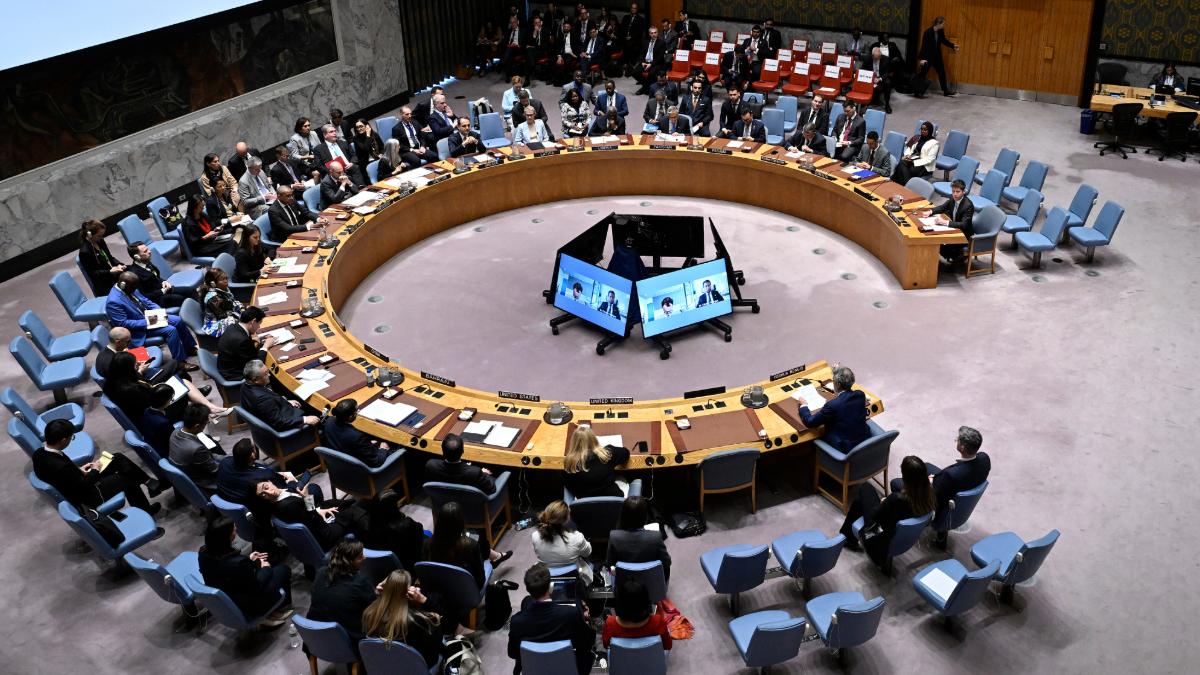
Sam Altman (seated on top right end), CEO of OpenAI, arrives to speak at a UN Security Council meeting on Artificial Intelligence during the 81st United Nations General Assembly, United Nations Headquarters, NY, September 23, 2026. (Photo by Anthony Behar/Sipa USA)(Sipa via AP Images)

Republish

While governments in the United States and Europe debate how to regulate and slow the development of frontier AI, countries across the rest of the world are approaching the question differently.

At the United Nations General Assembly High-Level Week last week, governments called for a greater role in shaping AI rules, expanding access to AI capacity and ensuring that efforts to make AI safer do not deepen existing technological divides. Pakistan, for example, backed calls to pace frontier AI while warning that “pacing must not become a new form of gatekeeping.”

Here is how governments outside the Western AI powers and China approached AI governance during UNGA.

UNGA 81 · General Debate

TUR

Türkiye

Recep Tayyip Erdoğan · President · Sept. 22

Called for a UN convention.

“It is long overdue now to establish a common international legal framework for AI,” Erdoğan said, urging countries to move faster toward a UN International Convention on Artificial Intelligence.
KOR

South Korea

Lee Jae Myung · President · Sept. 22

Proposed a “Global AI Universal Basic Society.”

Lee framed the idea as part of his K-Initiative, ensuring people could benefit from technological progress through AI-based healthcare, social security, labor, housing and culture. He also proposed a Global AI Hub to ensure “no country or individual is excluded from the fundamental benefits of AI.”

JPN

Japan

Takaichi Sanae · Prime Minister · Sept. 22

Pointed to existing international rules.

Takaichi highlighted the Hiroshima AI Process, which Japan launched with other governments to develop international principles and a code of conduct for generative AI. She also said Japan intends to host an AI Summit “at the earliest opportunity.”

BRB

Barbados

Mia Mottley · Prime Minister · Sept. 24

Said every state should have a say.

AI is, Mottley said, “a technology that will affect every State” and therefore “must be governed by rules that every State has had the opportunity to shape.”

COD

DR Congo

Judith Suminwa Tuluka · Prime Minister · Sept. 23

Linked AI to the digital divide.

“The digital divide cannot become an intelligence divide,” Suminwa said. She backed the UN Global Dialogue on AI Governance and a proposed capacity-building fund, and linked AI infrastructure to critical minerals, including cobalt.

ZAF

South Africa

Ronald Lamola · Minister of International Relations and Cooperation · Sept. 24

Called for an African role in setting the rules.

“Africa must have a stake in shaping the rules that govern the development and deployment of Artificial Intelligence,” Lamola said. He tied the issue to Africa's critical-mineral resources and the need for greater beneficiation and technological development on the continent.

BGD

Bangladesh

Tarique Rahman · Prime Minister · Sept. 24

Warned about an AI divide.

“We do not want today's digital divide to become tomorrow's artificial intelligence divide,” Rahman said, calling for technology transfer, skills development and affordable access to modern technologies for developing countries.

NGA

Nigeria

Kashim Shettima · Vice President · Sept. 24

Pushed back against a risk-first approach.

Delivering President Bola Tinubu's statement, Shettima said: “We refuse to surrender our technological future to paranoia.” AI could be used “to wage war,” he added, but also “to transform healthcare, education, agriculture, governance and economic productivity.”

PAK

Pakistan

Mohammad Ishaq Dar · Deputy Prime Minister and Foreign Minister · Sept. 23

Took a middle position on slowing AI.

Dar said Pakistan takes calls to pace frontier AI seriously, while warning that slowing AI development should not become a way for a small number of countries or companies to control access to the technology. “Pacing must not become a new form of gatekeeping,” he said.

ARG

Argentina

Javier Milei · President · Sept. 23

Argued against preemptive regulation.

Milei said giving governments control over AI innovation meant “granting some people … the power to limit what everyone else can create.” Argentina's approach would include “the commitment to not regulate preemptively, limited liability for companies operating with AI agents and tax incentives.”

IND

India

S. Jaishankar · External Affairs Minister · Sept. 2026

Emphasized national AI ecosystems.

“We believe in the right of each nation to shape its ecosystem with the development of its own models and deployment strategies consistent with its national goals and priorities,” Jaishankar said. “AI will be very much part of our partnership agenda with the global South.”

Key initiatives launched and forward commitments

  • Call for Control of Frontier AI Models — Launched by Finland and Norway on Sept. 21, calling for pre-deployment testing, independent evaluation, common standards and exploration of an international institution. The Norwegian government says 22 leaders supported the appeal at launch.
  • Partners for Multilateralism (P4M) Declaration — A multilateralism and UN reform declaration — not specifically an AI governance initiative — co-signed by the EU, Kenya, Australia, Barbados, Canada, Brazil and India.
  • UN Independent International Scientific Panel on AI — Barbados will host the second in-person meeting of the panel in November 2026.
  • Japan AI Summit — Japan intends to host an AI Summit “at the earliest opportunity,” Prime Minister Takaichi told the UNGA.
  • UK G20 AI presidency — Prime Minister Andy Burnham said the UK will put AI at the heart of its G20 presidency next year, seeking a single set of global principles and standards.
  • Geneva AI Summit — Announced by Switzerland for June 21–22, 2027 at Palexpo in Geneva. Theme: “Bridging Innovation and Trust.”
  • Second UN Global Dialogue on AI Governance — New York, May 3–4, 2027.

Statements from the 81st session are indexed by country at gadebate.un.org.

Support Tech Policy Press
If you've found our work helpful, consider supporting us.

Authors

Ramsha Jahangir
Ramsha Jahangir is Deputy Editor at Tech Policy Press. Previously, she led Policy and Communications at the Global Network Initiative (GNI). As an award-winning journalist and Tech Policy Press reporting fellow, Ramsha has extensively reported on tech and power. Ramsha holds a Master’s in Journalism...
Justin Hendrix
Justin Hendrix is CEO and Editor of Tech Policy Press, a nonprofit media venture concerned with the intersection of technology and democracy. Previously, he was Executive Director of NYC Media Lab. He spent over a decade at The Economist in roles including Vice President of Business Development & In...

Topics

Related

Perspective
Who Is AI Risk For? Centering People in the AI Risk ConversationSeptember 23, 2026
Newsletter
At the UN and in Washington, Leaders Clash on Approach to AISeptember 27, 2026
News
Can the United Nations Help Slow the AI Race?September 21, 2026