The World Doesn't Need Another UN AI Declaration. It Needs Architecture.
Michael L. Bąk, Supheakmungkol Sarin, Adrian Mak / Jun 29, 2026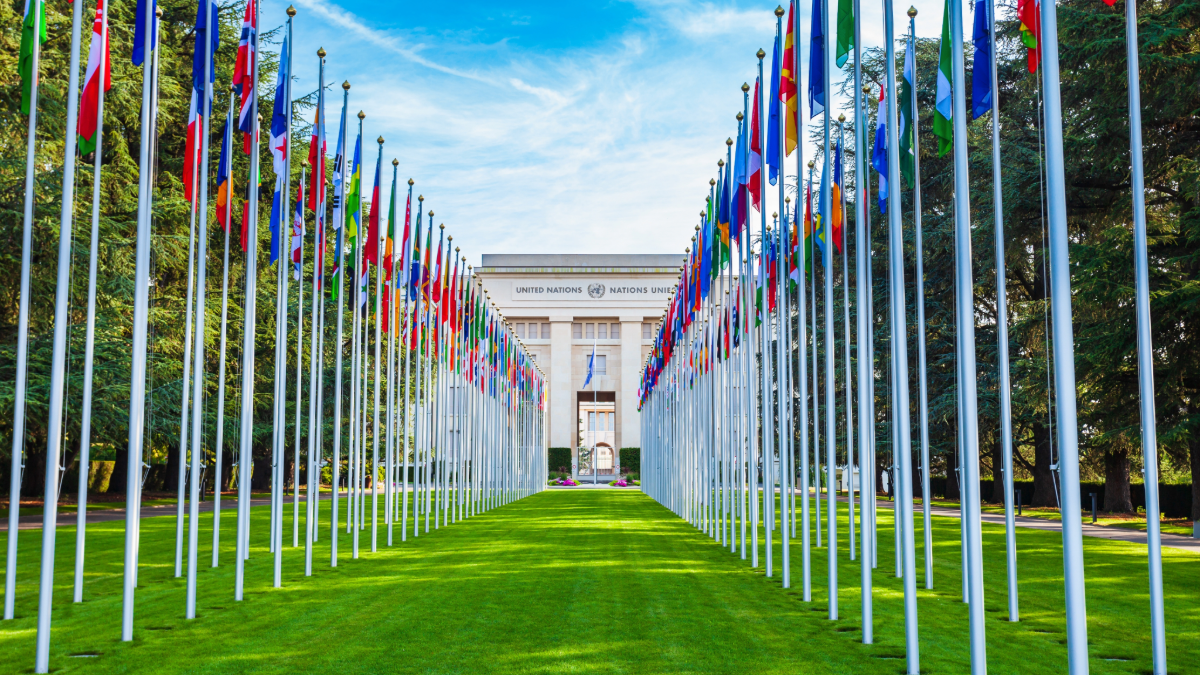
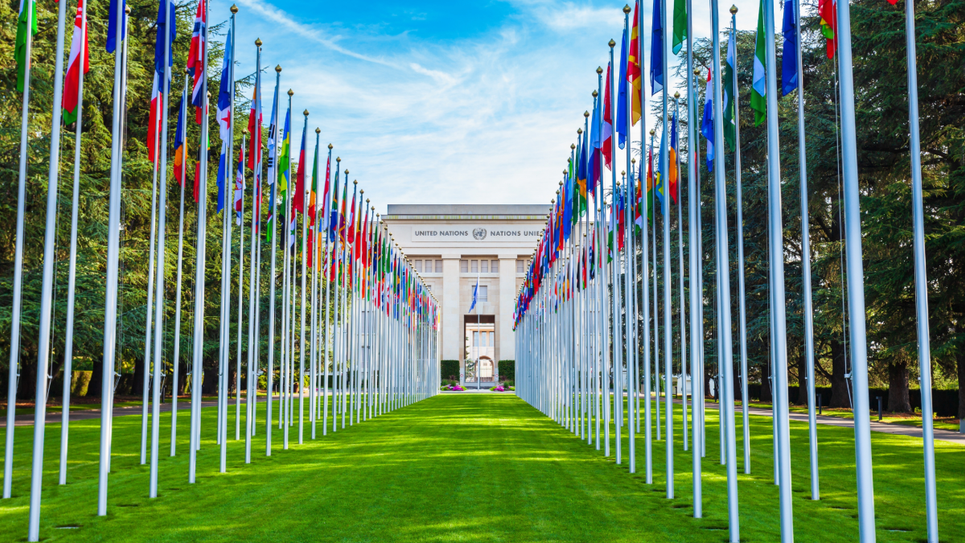
The United Nations Office Geneva in the Palais des Nations. Shutterstock
Somewhere in Geneva next month, a diplomat will declare that artificial intelligence must benefit all of humanity. That statement is easy to make — and nearly impossible to disagree with. The harder question, and the one that will define the United Nations’ first Global Dialogue on AI Governance, is whether fine words this time produce the architecture to back them up — architecture built not only by the powerful, but also on the knowledge, participation and agency of the global majority.
Governments, civil society, researchers, private enterprises and technical experts will gather to discuss some of the most critical issues of our time. The timing is critical because frontier technology, including AI, is no longer an abstract technology policy issue. It is reshaping labor markets, public services, education, information ecosystems and the agency and cognitive abilities of people across diverse communities here in Asia.
The institutions currently shaping AI governance remain concentrated in a small number of wealthy countries, powerful companies and well-resourced research environments. For many countries in Asia and the Pacific, AI systems are arriving faster than the regulatory, technical and civic infrastructure needed to understand, evaluate or challenge them — and well before communities have built the resilience to absorb harms that are already forming. As our region’s policymakers simply try to keep pace with foreign AI technology, we’ve barely moved the needle on discussions around catastrophic and existential risk.
That is why the UN Dialogue remains critical for humanity. The UN is the only forum where every member country has an equal seat, and where civil society, affected communities and technical experts can press for governance that reflects more than the priorities of dominant markets, powerful governments and wealthy private interests.
But the Dialogue will only succeed if it becomes more than an annual convening bringing together the familiar, privileged voices. It must center the world’s majority and produce the architecture needed to turn shared principles into practical governance.
First, the Dialogue must be judged by follow-through, not participation alone. A successful first session should close with a limited and prioritized set of workstreams, named and regionally balanced stewards, a clear reporting cycle, and a formal route for stakeholder evidence to enter deliberations. In this vein, the Universal Periodic Review could provide some inspiration.
Without these basic structures, the Dialogue risks becoming a symbolic event: widely attended, diplomatically discussed and generally ignored in substance. We don’t need another forum that produces de minimis consensus language while leaving each country to interpret it alone. It needs a recurring mechanism that helps stakeholders alongside governments identify what is working, where implementation is failing and what support is needed to close the gap.
Second, capacity-building must be treated as the foundation of AI governance, not as a secondary developmental concern. Safe, rights-respecting and accountable AI governance cannot be implemented without trained regulators, judges, parliamentarians, auditors, procurement officials, incident responders, researchers and civil society groups. Nor can it succeed without practical infrastructure: policy observatories, testing tools, audit pipelines, harm-mapping systems, language-specific evaluations and institutionalized routines.
This is especially urgent in Southeast Asia and across the Global Majority. AI systems are often designed in a few Northern jurisdictions (often with weak or absent regulatory safeguards) but deployed globally. When a regulator in our countries cannot evaluate a frontier model, a procurement office cannot assess algorithmic bias or a judge cannot adjudicate an automated decision, the result is not merely a local capacity gap with localized implications (that can be ignored by the privileged in the North). Rather, substantively it becomes a detection, response and remedy problem for everyone.
Capacity is also a matter of sovereignty. Governments that lack domestic expertise cannot negotiate confidently with frontier-model providers from an informed baseline. They may find lawmaking effectively outsourced to foreign consultants or corporate actors.
Third, the Dialogue must recognize Global Majority expertise and lived experience as governance knowledge. Too often, global AI debates are framed by commercial incentives and national-security concerns generated in a narrow set of institutions and geographies. Yes, these perspectives matter, but they are also incomplete. They can overlook harms that are harder to quantify: institutional degradation, weakening of community bonds, cultural and linguistic exclusion, exploitative labor practices, gendered abuse and erosion of public trust and information integrity.
People experiencing AI harms are not merely “stakeholders” to be consulted after policy options have been drafted. Workers whose tasks are being redesigned, women and girls targeted by AI-enabled abuse, children and other vulnerable people exposed to unsafe AI companions, migrants and gig workers, people with disabilities, gender and sexual minorities, low-income users and local-language researchers all hold knowledge that governance systems need in order to work.
Lastly, the Dialogue should create legitimate space to discuss catastrophic and existential risk. These risks should not be treated as speculative concerns reserved for a handful of wealthy governments, frontier labs or Northern research institutions. Compute is scaling rapidly, and evaluations already show AI systems completing increasingly long and complex tasks once requiring focused human expertise. The Dialogue can help ensure these questions are addressed transparently and inclusively so that we can define which capabilities require collective oversight, restraint and coordination.
The Dialogue should therefore change how AI governance knowledge is produced. Risk taxonomies should incorporate harms identified by affected communities and Global Majority researchers. Regional research and language-specific evaluation work should be commissioned and cited alongside work produced by frontier AI developers. Dialogue outputs should be reviewed not only for whether they consulted diverse groups, but for whether those groups’ knowledge actually shaped the conclusions – and improvement recommendations. And the Dialogue must create the space needed to have very serious conversations about catastrophic and existential risks in a way that private interests cannot dominate the narrative. Ultimately, the evolution of AI and frontier technology is a public interest issue and the tools that result should be treated as public goods.
The Dialogue should therefore establish a standing, regular and inclusive mechanism to surface and deliberate on catastrophic and frontier risks. This means a dedicated workstream with regionally balanced membership, a mandate to commission independent technical assessments and a formal process for Global Majority governments and researchers to shape the risk frameworks themselves, rather than inherit them from frontier labs or Northern institutions.
The UN Global Dialogue has a rare opportunity. It can help align AI governance around shared values: human agency, dignity, rights, accountability, environmental sustainability and equitable prosperity. It can advance pro-social AI. But these values will not implement themselves. They require institutions, evidence, resources and mechanisms that allow countries and communities to act.
The test for Geneva is not whether participants can agree that AI should benefit humanity — that bar is too low. It is whether the Dialogue produces the architecture to make that promise credible, and whether the communities with the most at stake helped design it.
The Dialogue's value will not be measured in declarations. It will be measured in what gets built afterward, by whom, and for whom. That is the standard the Global Majority should hold it to.
Authors