The World’s Growing Patchwork of Age Bans and What It Reveals
John Perrino / Oct 14, 2026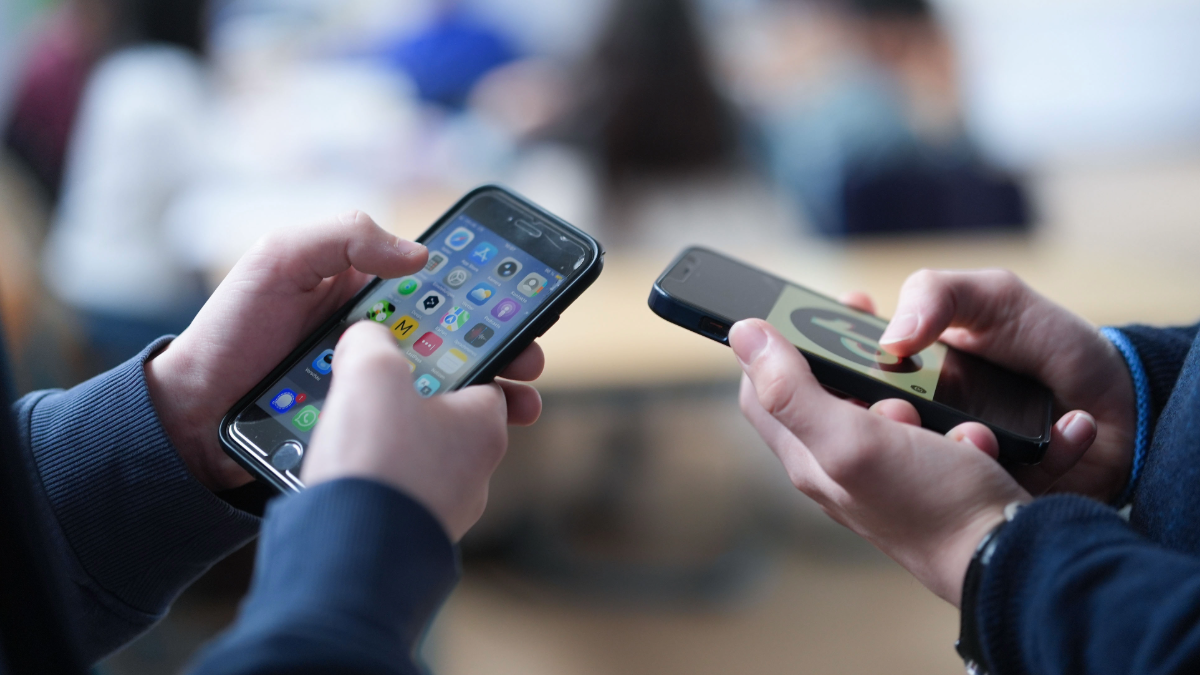
Two pupils stand in a classroom at Goethe-Gymnasium and look at their smartphones; the TikTok logo appears on one of the displays. Photo by: Marcus Brandt/picture-alliance/dpa/AP Images
New York University professor Jonathan Haidt’s proposal for an under-16 ban in his 2024 best-selling book, The Anxious Generation, drew widespread attention. Australia’s first-of-its-kind social media ban for children under 16 went into effect nearly a year ago. Now, policymakers around the world are considering social media age restrictions.
I’ve given up some sleep to track policy action around the world, relying on desk research and collaboration with Internet Society colleagues in more than 30 countries and a global community of more than 110 active chapters across six continents.
Across the globe, social media bans, or delays, clearly resonate with parents and politicians. They see children (and adults) tied to their phones and computers. Nearly everyone agrees something needs to be done to improve children’s online safety.
The concern is real. The attention and headlines are global. But a closer look at policy trends tells another story about the direction of social media age restrictions.
While we can’t dismiss the attention social media bans have received, the trend is much more nuanced than a proliferation of “Australia-style” bans:
- A closer look at policy developments shows a global preference for safety-by-design requirements over full bans.
- Technical limitations, legal restrictions, and social values are influencing decisions to reject complete bans in favor of safety design and education.
- Not every country is pursuing social media age restrictions for online safety, or at least not just online safety. While subjective and a minority of cases, politics and national security concerns are also driving action.
Key findings
More than 60 countries are formally exploring restrictions, but only seven countries have actually implemented bans to date.
Of those few countries, the minimum age, covered services, and age verification requirements all vary. Research on effectiveness is limited, but there are now initial findings from government and academic studies in the UK and Australia.
While nearly one-third of the world’s countries are formally considering or taking action on social media age bans, fewer than a dozen have passed or implemented national social media age restrictions — Australia, Brazil, China, Egypt, Gabon, Indonesia, Malaysia, Turkey, United Arab Emirates, United Kingdom, and Vietnam.
In countries with active legislation, proposals often lack support from a political majority or the ruling party. The recently introduced EU KIDS Act, with an under-13 ban and under-15 restrictions, would preempt proposals and draft legislation across the 27 countries in the EU.
Why have so few countries taken action despite widespread calls for social media bans, including from heads of state on the world stage?
Of course, regulation can take a long time. Powerful companies are also pushing back on these rules. Those are important factors, but there’s more to it.
In fact, a growing number of countries have ruled out or oppose a full ban, including Estonia, Mexico, and South Africa. The new EU KIDS Act proposal and Canada’s Safe Social Media Act also offer prominent alternatives to bans that focus on accountability for safe design.
Technical, legal, and social constraints on bans
Policymakers considering bans must recognize three types of implementation challenges: technical feasibility, legal requirements, and broader societal values.
Social media age restrictions are difficult to enforce and require collective buy-in. That’s difficult when teens generally find it uncool and unhelpful to comply. Policymakers must decide whether to prioritize stricter age checks or focus on measures that make online services safer for children and all users.
Technical limitations
Effectiveness of bans
In Australia, more than 80% of children and teens under 16 continued to use social media accounts in the first few months after the ban went into effect, according to eSafety government research and a British Medical Journal study.
In Malaysia, a social media ban requiring government ID checks was quietly postponed from June 2026 to January 2027 after companies declined to comply. Social media companies reportedly raised data security concerns about processing IDs, arguing the current requirements are unworkable.
VPNs
While there is a lot of discussion about VPNs, government reports found only 7% of children in Australia and 5% in the UK reported using VPNs to circumvent age restrictions. While these figures are self-reported and the actual percentages may be higher, the research finds that children don't have to use VPNs because there are easier ways to get around age restrictions.
VPN downloads often spike when social media restrictions go into effect. This likely means adults are more likely to use technical tools to circumvent age verification requirements than children and teens. Research and media reports find young people draw mustaches or use other simple methods to avoid detection.
Data breaches and tracking
Security breaches and privacy violations are not theoretical. Multiple high-profile incidents occurred in the past year.
At least 70,000 photos of government IDs and other sensitive personal information were exposed when a third-party customer service provider for the social media company Discord was breached in October 2025. The incident happened shortly after age verification requirements went into effect under the United Kingdom’s Online Safety Act.
Discord broke ties with the age and identification provider Persona earlier this year after reports that the company accidentally left some of its code and capabilities publicly exposed. The decision came just ahead of Discord’s planned global age verification rollout that was delayed until September.
While the EU age assurance system is open source, making it easier to identify and address vulnerabilities, a security researcher found significant vulnerabilities within a few hours of the code going live.
Legal restrictions
Legal restrictions include jurisdictional, children’s rights, freedom of expression, and privacy protections that limit complete bans and strict age verification.
Reddit and Australian teenagers are challenging the under-16 social media ban in separate legal cases. The lawsuits raise concerns about access to political communication and privacy risks, which they argue could be more narrowly and effectively addressed by focusing on safety by design. The challenges call attention to a disproportionate impact on vulnerable and rural communities, including those with disabilities and indigenous young people.
A French constitutional court blocked a planned social media ban due to freedom of expression and privacy concerns. The European Commission previously warned the legislation would breach European law. There are also many First Amendment free expression legal challenges against social media bans passed in US states.
Social values
Government consultations have been nearly unanimous in calling for safer design and accountability over blanket bans. They also frequently emphasize that efforts to protect children must not restrict their rights to free expression and access to information.
An Irish parliamentary committee reported that none of the experts it consulted recommended a social media ban for children under 16.
Legislation to ban children under 15 from using social media was blocked in Mauritius following consultations that raised concerns about freedom of expression.
Mexican President Claudia Sheinbaum rejected an outright ban following public consultations and engagement with researchers, including The Anxious Generation author Jonathan Haidt and Meta whistleblower Arturo Bejar.
Canada initially pursued a ban on social media access for children under 14 but announced a more nuanced approach, allowing access for under-16s where companies can demonstrate that their services are safe.
Following expert consultations, the European Commission rejected an outright ban. The EU KIDS Act proposes a developmental approach with an under-13 ban, parent-controlled accounts for 13- and 14-year-olds, and safety design requirements for teens under 18.
Why are governments pushing for age bans?
In a small but important minority of cases, countries make the case for social media age restrictions to address national security concerns, such as youth violence, recruitment into armed groups and organized crime, or posts critical of the government.
Social media bans have become a popular political message for heads of state and ministers, particularly in Europe, where such measures poll well and many politicians face elections next spring. They are often seen as politically attractive with broad public support, and tap into frustrations with Big Tech.
Despite strong calls for bans on the world stage, progress has often been limited, with efforts running into legal challenges and ongoing questions about the effectiveness of blanket bans.
Conclusion
Social media bans are easy to explain and politically attractive. Implementing them, however, has proven far more difficult and controversial. Policymakers face legal hurdles, technical limitations, and concerns about fundamental rights to free expression and access to information.
Focusing on restrictions leads to more intrusive age verification with new security, privacy, and access issues for children and adults. Encouragingly, global policy trends show a more direct focus on requiring safety by design.
Instead of asking how to police age restrictions, governments must focus on accountability and incentives for safer online services.
I want to thank and acknowledge Tech Policy Press for making its Global Social Media Age Restriction Tracker publicly accessible. The Internet Society is now helping with the tracking.
Authors