The Supreme Court’s Decision in Trump v. Slaughter is Misguided, But Changes Little
Mark MacCarthy / Jul 6, 2026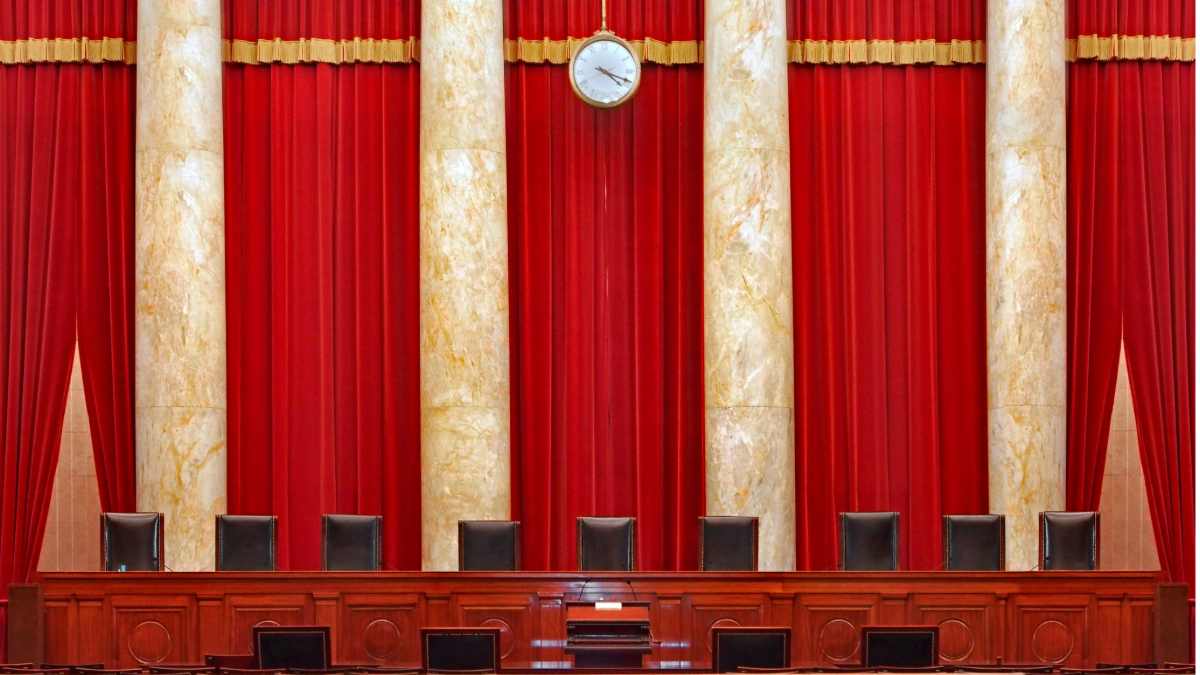
The US Supreme Court.
In Trump v. Slaughter, the Supreme Court overturned the 91-year-old Humphrey’s Executor decision, thereby giving the president for the first time unfettered authority to fire members of independent agencies at will. The response from many commentators is that this decision represents a significant expansion of executive power that will erode democratic protections against abusive government power and replace technical agency decision-making in the public interest with a political “spoils” system that prioritizes presidential policy preferences. For instance, law professor Steven Vladek writes that the decision will have “massive ramifications for the functioning of the government long after Trump is gone.”
Time will tell, but I expect the decision is more likely to result in a relatively minor increase in executive power, allowing the president further control over multimember, bipartisan agencies. The decision is unnecessary as a matter of good government since the president already has the power to set the policy and enforcement focus of independent agencies through his nomination of commission members and selection of its leadership. But mistaken as it was, it is not a crisis of democracy.
The narrowness of the decision has escaped a large section of the commentariat because its “massive ramifications” have been trumpeted for years by voices on both sides of the political aisle, erecting a minor scuffle over agency design into a fundamental conflict of principles.
Economist Paul Krugman exemplifies the confusion. He accuses the Court of siding with “dictatorship—and chaos”. Imagine, he says, how decisions about the safety and effectiveness of prescription drugs will now be made by “political appointees” loyal to the President, instead of by the scientists and researchers at the Food and Drug Administration. But the FDA is not an independent agency and its decision-making is legally unaffected by this ruling. It is an administrative agency within the US Department of Health and Human Services (HHS), and since 1988 its head has been appointed by the president and subject to termination at will. FDA decisions have been left to the expertise of specialists, not because of legal constraints, but because tradition and custom have habituated political leaders to keep their noses out of detailed scientific matters that are plainly outside their generalist background. That might change because of this administration’s disregard of the wisdom of traditional normative constraints, but not because of the Court’s ruling in Slaughter.
The leadership of other executive agencies are subject to at-will dismissal by the president, including the administrators of the free-standing Environmental Protection Agency charged with keeping the nation’s air and water clean and the Occupational Safety and Health Administration, which is part of the Department of Labor, responsible for ensuring worker safety on the job. Their ability to do their jobs is unaffected by Slaughter.
The court’s rationale
Congress explicitly said in the Federal Trade Commission (FTC) statute and in dozens of others like it that commissioners in particular agencies could be fired only for cause. In the case of the FTC, this means only “for inefficiency, neglect of duty, or malfeasance in office.” The Court denied Congress the authority to restrict the president’s power in this way, and its reasoning is not frivolous. It was prefigured in the 2020 Seila Law LLC case, where the Court allowed the president to remove the head of the Consumer Financial Protection Bureau, despite the ban on at-will dismissal in the enabling stature.
The unanimous 1935 Humphrey’s Executor ruling that upheld Congress’s capacity to shield commissioners from at-will removal held that the FTC’s duties were “neither political nor executive, but predominantly quasi-judicial and quasi-legislative.” The FTC made adjudicatory decisions that were like what judges did and it established regulatory rules, which was like what the legislature did, but the court thought it did not enforce the law, which is what the executive branch does. Because it had no “executive power” to enforce the law, the Humphrey Court reasoned, the FTC needed to answer only to Congress and the courts.
In Slaughter, however, the Court found the weakness in this rationale. Is it really plausible to think that OSHA and EPA perform executive functions while the FTC does not? The FTC clearly enforces the law. Whenever an agency “executes a congressional mandate against private parties, it exercises executive power.” In that way, the FTC unquestionably exercises executive power, and by the standard the Court set out in Humphrey, it must therefore be controlled by the president through the power to fire its commissioners at will.
Of course, the Court could have invented a separate rationale for agency autonomy, such as respect for the Congressional determination that the mandate of the agency was so important it needed a special layer of insulation from outside control. But it chose not to do this, except in a separate decision in the case of the Federal Reserve Board.
The majority opinion says that it does not “determine the fate of officials not before us.” But the dissent says the decision affects “dozens of independent commissions,” and it is hard to disagree with the dissent, since each of them unquestionably performs executive functions as defined by the Court.
A list of independent agencies would include agencies that perform vital economic and public health and safety functions such as regulating securities, consumer product safety, communications, financial services, and energy supplies and safety. Many of them have explicit provisions preventing the president from firing members at will such as the Federal Energy Regulatory Commission (FERC), and the Consumer Product Safety Commission (CPSC), where the president fired three Democratic commissioners in 2025, an action the Court let stand pending review by a lower court and which will now undoubtedly be upheld.
But even where the statute of an independent agency does not provide an explicit no-firing-except-for-cause provision, such as is the case with the 1934 Communications Act establishing the Federal Communications Commission, previous presidents traditionally assumed—along with everyone else—that providing commissioners with a fixed term in office, typically 5 years, meant that they could not be removed except for cause during that term. This decision unquestionably changes that view. All regulatory decision-makers (apart from the Federal Reserve Board Governors), be they at executive branch agencies or at independent agencies, regardless of statutory term of office and clauses preventing dismissal except for cause, are now subject to removal by the president for any or no reason.
The implications
This is not a good decision. Precisely because regulators must make normative judgments weighing often conflicting evidence and interpreting statutory standards like fairness and the public interest, it is often helpful to have several people of diverse political orientation reach a consensus on these contested matters. The Court’s ruling attenuates the role of diversity in regulatory decision-making. This is especially disturbing when fundamental rights like privacy are at stake, which was the province of the FTC. For this reason, the EU requires its privacy regulators to be independent of the current political regime and expects other countries to do the same. With the Slaughter decision weakening the FTC’s independence, the agreement governing data transfers between Europe and the US is in jeopardy.
While the decision is misguided and unnecessary, it is not the disaster commentators are depicting. The key thing that allows the president to control what goes on in the executive branch and in administrative agencies is not the power to fire officials but the power to appoint and remove their leadership. The president can name any commissioner to be the chair of a multimember bipartisan commission. As administrative head, the chair sets the regulatory and enforcement priorities of the agency and is appointed for general coherence with the president’s overall approach.
The Humphrey’s Executor decision noted correctly that “one who holds his office only during the pleasure of another cannot be depended upon to maintain an attitude of independence against the latter's will.” But Congress has already determined that the agency leaders maintain their office only during the pleasure of the president. And so the president effectively maintains control of both executive branch agencies and independent agencies not through the ability to fire administrators but through the ability to appoint them and remove them from their leadership position at will.
The result of this ability to name and remove agency leadership has been a predictable swing in regulatory philosophy at these commissions when administrations change. When Mark Fowler and Dennis Patrick headed the Federal Communications Commission (FCC) during the Reagan administration, they espoused the president’s deregulatory philosophy, weakening generations-old rules against media concentration and repealing the Fairness Doctrine which for decades had imposed a duty of balanced news coverage on broadcasters. Decades later, FCC chair Tom Wheeler embodied the more regulatory approach of the Obama administration, imposing net neutrality rules for internet service providers. Ajat Pai, the FCC chair in the first Trump administration, promptly repealed them.
These swings in regulatory philosophy are part of the democratic process. Do we really want a president to be powerless to implement the protections for consumers, workers and the environment on which he or she ran? Are presidential policies mere whims which the people the president has chosen as agency heads should be free to ignore? At one level, the Slaughter decision just represents an unnecessary but not irrational attempt to slightly increase the power of the president to establish and enforce the policies he or she was elected to carry out.
Critics too often seem to think that the vulgarity and corruption of the current president is an intrinsic feature of the presidency and justifies permanent restrictions on presidential powers. But the next administration might be more progressive and might welcome an increased ability to sweep away the debris of the previous administration lodged in independent agencies in order to put in charge a new team of progressive change agents. It is worth remembering that Franklin Roosevelt fired FTC Commissioner William Humphrey, after first asking for his resignation, because the new president wanted to put his own progressive regulators in control of the FTC in order to carry out his activist antitrust program, which Humphrey vigorously opposed.
Consequences for a new digital agency
In my book Regulating Digital Industries, I argued that Congress should create a new digital agency to regulate tech companies to protect privacy, ensure competition and preserve free online speech through transparency requirements. I thought that it should be structured as a multimember bipartisan regulatory commission whose members could be removed only for cause. This structure seemed best primarily because the digital agency would inevitably be close to decisions that affect the content that social media and other platforms provide to the public and so some insulation of specific decisions from executive branch control seemed to be warranted.
I still think that would be the best structure for a digital regulatory agency, even though under Slaughter the commissioners would be subject to at will dismissal by the president. Moving to a single-administrator agency directly under the president would provide no additional protections, and a multimember bipartisan structure would provide some decisional autonomy. Digital regulatory decisions would be made by majority vote of a bipartisan five person commission, no more than three of whom can be from the same political party. With the overturning of Humphrey’s Executor, the decisional independence of such a digital commission has been attenuated, and the president has more power to direct the outcome of specific agency actions, since he can remove any commissioner who is inclined to vote the ‘wrong’ way. But this power of removal is limited by practical considerations, such as whether the number of remaining commissioners constitutes a quorum.
The future
Vast amounts of ink have been spent by conservative commentators on reining in supposedly out of control regulators. But this picture is a fabrication of the right wing imagination, not a reality. The oddity is that liberal and progressive thinkers seem to have adopted the same fantasy of autonomous regulators, only now these officials are seen as technocratic experts bravely defending the public interest against the whims of presidential and congressional politicians who are viewed as controlled by special interests.
The reality is less glamorous. It is thoughtful and dedicated government officials whose everyday work is directed by politically appointed leaders and moved to the left or to the right, sometimes dramatically, depending on the administration in power. That pattern will continue virtually unaltered now that the president can fire at will independent agency commissioners rather than just remove commissioners from their positions of leadership. It will give the president more power to insert his or her own leadership team in independent agencies and carry out his or her agenda and so make partisan swings more pronounced. But it does not portend the end of democracy as we know it, and might even have some upsides for a new progressive administration.
Authors