The New UK Prime Minister Inherits a Social Media Ban. The Real Goal Is Safety by Design.
Maeve Walsh / Jun 26, 2026Maeve Walsh is the Director of the Online Safety Act Network.
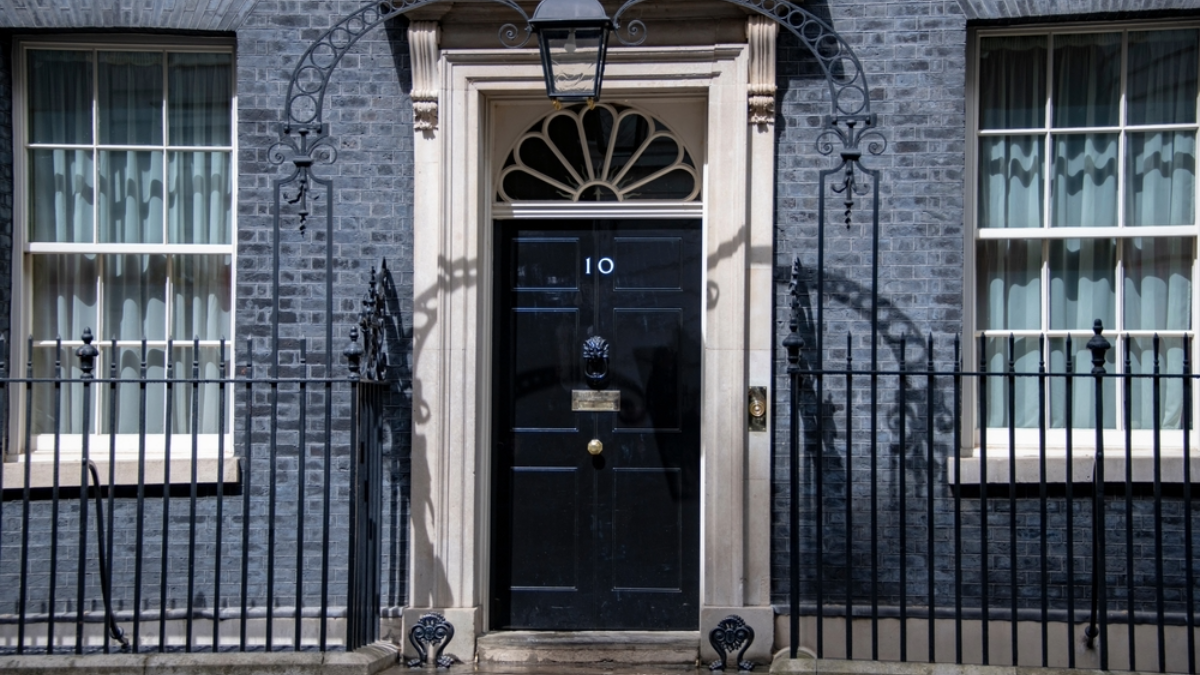
10 Downing Street. Shutterstock
“I am not going to claim that even those measures will mean that no kids are on social media platforms.”
This was the UK’s Secretary of State for Science, Innovation and Technology, Liz Kendall MP, responding to questions from Members of Parliament after the announcement that Britain would be following Australia in the introduction of an under-16 social media ban, along with other measures to limit children’s exposure to harmful features and functionalities. On the ban decision, she went on: “This is as much about resetting the expectations of eight, nine and 10-year-olds, by saying, ‘You won’t be going on this until you’re 16.’”
The honesty about the objectives of the measure—and its limitations—is, on one level, refreshing. Given that much of the impetus of the Smartphone Free Childhood campaign, which was instrumental in shifting the Government’s position on this, comes from parents of primary school-aged children, justifiably alarmed at what might lie ahead for their kids in the online world and looking for legislative support to say “No,” it is also not that surprising.
But it is also alarming, given Kendall brought forward no plans to increase the safety protections for those teens who, by her own admission, will still be active on “banned” platforms; data published this week in the BMJ suggests that 80% of Australian teens are still on social media, despite the ban in that country. Nor will Kendall’s proposed additional measures for 16-17 year olds (such as a potential ban on infinite scroll or nighttime “curfews”) manage the resultant cliff-edge for any 16 year olds who have complied with the ban but then lawfully access platforms that remain unsafe.
A ban may be a strong signal of intent, but if the new Prime Minister is serious about delivering for the parents who campaigned so hard for the State to stand up to Big Tech and its reckless lack of care for children, it can’t be all there is. The good news for Andy Burnham—if it is indeed he who walks into Number 10 in a few weeks time—is that a complementary approach, built on the principles of product safety and safety by design that are fundamental to all other industrial sectors, is possible. The even better news for a PM who might be looking for popular quick wins is that it is easily and immediately implementable under the Online Safety Act’s existing legislative framework, and it's already popular with the public, with recent polling showing that 84% believe tech companies should be required to prove their products are designed and tested to be safe before use—the same standard that already applies to toys, food, household appliances, and most other products.
When the OSA was passed nearly three years ago, there was cross-party consensus that its objective—to make regulated services “safe by design”—should be stated explicitly in its very first section. It may have been something of a novel concept then. But in the intervening period, the international consensus around this has grown. In recent weeks, two influential Parliamentary committees in the UK along with international organizations including the UN Commissioner for Human Rights, UNICEF and the Council of Europe have backed this approach as an alternative to blanket bans for children. The UN Secretary-General last week called for States to “require tech companies to embed user safety in product design – and rein in misguided algorithms and misuses of artificial intelligence”. The UK even signed up to the recent G7 leaders’ call for “digital platforms which are safe-by-design, secure, privacy-preserving, age-appropriate and protective of children and youth”. The new PM has a ready-made opportunity to build on this momentum, not only showing that the UK can still set the pace on tech regulation but also restoring faith in politicians, regulators, and institutions to fully and forcefully deliver on the commitments the public are crying out for.
The harms from social media for children are pervasive and persistent and, whether parents, policymakers or politicians want to tackle them from a safety (exposure to harmful content) or a wellbeing (excessive screentime) perspective, treating these harms as a product safety failure gets to the root of the problem in a way that age-gating the products (and hoping for the best) can never do. Safety by design provides an outcome-focused, future-proofed requirement for companies to safety-test their products and take responsibility for designing out the risk of harm to users before their use. It holds them accountable for the design choices they make and prevents them from live-testing harmful features and functionalities on children and vulnerable users.
The Online Safety Act Network, with the expert input of 5 Rights Foundation and other organizations, has even done the legwork for the incoming PM. In May, we launched a code of practice on safety by design providing a road map for how to do this in practice, within the existing OSA legislative framework. Forty-five civil society organizations and experts endorsed the code. Its adoption—along with a clear steer to Ofcom that they need to get on and deliver it—would send a welcome signal to parents that the new PM is prepared to go further than his predecessor in taking on Big Tech and would reassure civil society advocates, academics and experts that he is also willing to act on evidence of what works.
Tech is not exceptional. Abiding by the product safety requirements found in every other industrial sector should be the norm. Announcing a ban may have signaled a symbolic reset in children’s relationship with social media. Embedding safety by design is the only way to ensure that a substantive reduction in their exposure to harm follows. The UK—and its new PM—has an opportunity to lead the world in this, to reset our relationship with Big Tech, to foster innovation that provides better alternatives to the US and Chinese hyperscalers, and to reduce the negative impacts these companies are having on our lives, politics, and democracy.
Authors