How to Close the Federal Election Commission’s Dark Money Loophole
Max Weber / Jul 20, 2026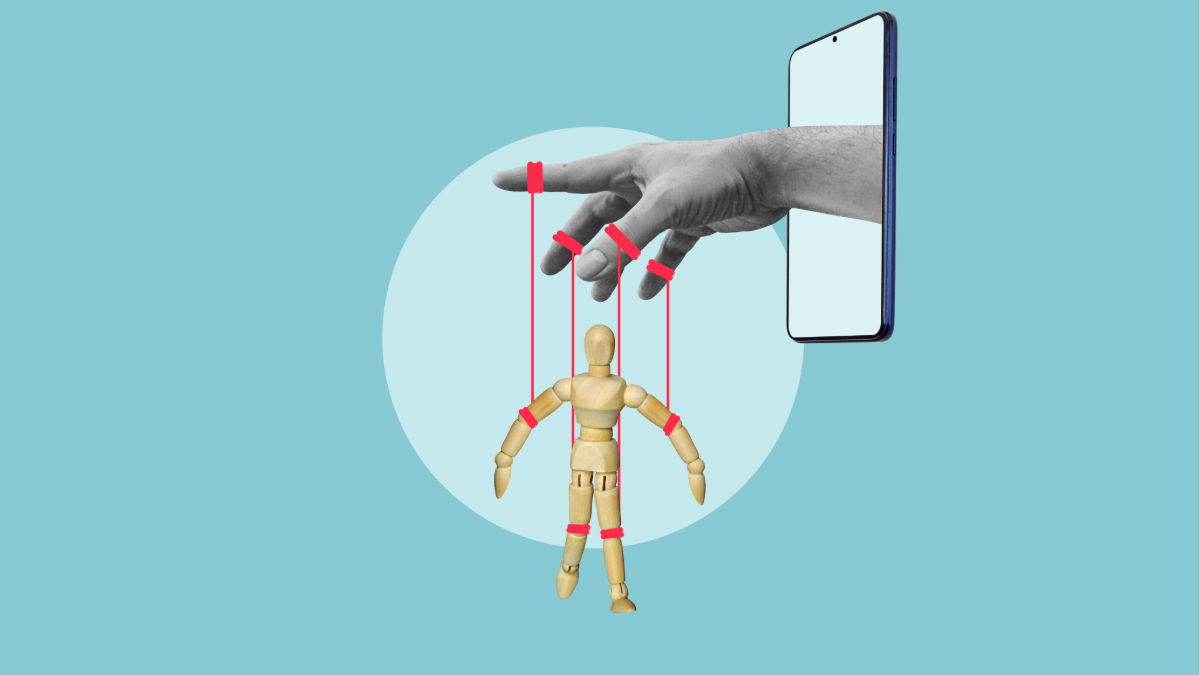
As voters head to the polls for this year’s midterm elections, regulators are ignoring one of the most efficient dark money delivery systems in American politics.
Twenty percent of Americans—including 37% of adults under age 30—regularly get their news from social media influencers, and research shows that these content creators can measurably shift candidate preferences and voting intentions. Yet, voters have no way of knowing when their favorite creator’s post has been bought and paid for by a campaign or political action committee (PAC).
This is because the Federal Election Commission (FEC) maintains a loophole that allows dark money groups to secretly pay social media influencers to shape public opinion. By evading the transparency rules that govern traditional political advertising, these groups are empowered to disguise coordinated messaging campaigns as organic, independent content.
With political actors spending millions to exploit this dynamic, the stakes are high. As voters prepare for the consequential 2026 midterm elections, the FEC's failure to impose disclosure requirements on influencers represents a growing and largely invisible threat to American democracy. To protect voters from the influence of dark money, it should draw from the Federal Trade Commission’s (FTC) well-defined rules for sponsored content to close the influencer loophole.
Trusted voices, for sale
Influencers maintain close, parasocial relationships with their social media audiences. As Renée DiResta argues in Invisible Rulers, fans view their favorite influencers not as distant media personalities but as regular people—as peers, friends, and trusted sources of information whose "ordinariness" lends them authenticity.
That feeling of trust and connection translates into real political power. Political influencers act as opinion leaders within their fanbases, discussing current events and mobilizing viewers to support causes and candidates. When voters form parasocial bonds with political influencers, the material those creators produce can sculpt candidate preferences and voting intentions at a level that surpasses traditional news outlets. A study of the 2021 German federal elections found that six percent of voters credited influencer content with helping them decide who to support. Research on the 2019 European Parliament elections found that one political influencer’s social media attacks on a candidate produced measurable electoral losses for that party.
Political actors have taken notice. More than a quarter of all US influencers were solicited by political organizations during the 2024 election cycle, often receiving direct instructions regarding the content they were supposed to push. That year, the Democratic National Committee and the Harris campaign paid over $4 million to a single influencer agency, while a Democratic-aligned PAC distributed at least $1 million to influencers to promote her candidacy—paying $5,000 to $15,000 per post. Meanwhile, the Trump campaign spent $1.8 million on influencer marketing in 2020 and exchanged gifts and perks with a MAGA influencer network in 2024.
The regulatory gap
Federal law requires that political ads disclose who paid for them. The FEC maintains ‘paid for by’ requirements across broadcast, print, and digital advertising. In 2023, the agency updated its rules to extend those requirements to internet-based activities—and then deliberately carved out an exemption for social media influencers.
The FEC’s reasoning was that paid influencer content doesn’t constitute advertising – it’s just individuals expressing themselves, even when they’re being paid to do so. Two Democratic Commissioners dissented, arguing that a political entity paying an influencer to promote its issues is exactly what advertising is. The Brennan Center agreed, writing that “there is no principled distinction between these newer methods of paid communication and typical online ads where the Commission’s disclaimer rules unambiguously apply.”
The exemption holds even when money plainly changes hands. Although PACs must report the money they spend on influencers to the FEC, they are not required to name the individual creators they pay if they use an intermediary agency or marketing network—so even the spending that does get reported never reveals who was paid to say what. A voter scrolling past a creator’s seemingly heartfelt endorsement sees no disclaimer on the post and has no way to connect it to a line item in an FEC filing.
A dark money goldmine
This is where the loophole amplifies the power of dark money. Because paid influencer posts are not required to carry disclaimers and political actors are not required to name the creators they sponsor, that content is virtually indistinguishable from a creator’s authentic opinions. The result is an ideal environment for dark money—defined by OpenSecrets as political spending whose source is concealed from the public—to launder persuasion through seemingly personal endorsements.
The Chorus Creator Incubator Program shows how brazen this can get. In 2025, WIRED revealed that this Democratic-aligned group offered influencers $8,000 per month to promote its candidates and issues while contractually prohibiting them from disclosing the relationship—or even that they were being paid at all. Operating entirely within legal bounds, Chorus effectively purchased the speech of trusted opinion leaders and then sealed the receipts.
A far more ambiguous example is the ‘Dilley Meme Team.’ Led by Brenden Dilley, the pro-Trump influencer network—which calls itself “Trump’s Online War Machine”—flooded the 2024 cycle with AI-generated and deepfake social media content that was often reshared and promoted by Trump’s campaign, from a viral compilation of Biden’s stumbles to the notorious “unified Reich” video. The campaign, in turn, provided the group with gifts, special press credentials, and behind-the-scenes footage, while the candidate apparently exchanged contact information with one of the team’s members. Because none of this involved a cash payment, some analysts treated the missing money as a core problem. But the influencer exemption plays a major role as well: even if there were direct cash payments to the group, it may not have triggered any FEC disclosure requirement since the exemption covers influencer content posted to one's own account. The result was that many of Trump's supporters potentially consumed content created with the support of the Trump campaign while believing they were viewing purely organic posts from fellow MAGA grassroots.
In this environment of confusion, the parasocial relationships influencers maintain with their audiences become a vulnerability for their viewers. Dark money groups deliberately leverage influencers' perceived authenticity, exploiting the trust audiences place in their favorite creators to quietly sculpt public opinion at a profound scale. The absence of disclosure creates a minefield of disinformation, in which viewers cannot distinguish creators' authentic views from those promoted at the direction of interest groups—what researchers Anastasia M. Goodwin, Katie Joseff and Samuel Woolley call a "new and growing form of 'inorganic' information operations," in which political actors distribute "elite-dictated propaganda through trusted social media spokespersons."
The fix
Dark money draws its power from concealment; from the ability for narrative warfare to be masked as organic content. Strip away the disguise and this power dissolves—which is exactly why disclosure is a potent weapon with which to combat dark money.
Advocates have already petitioned the FEC to close the gap, and fixing it is relatively straightforward: the FEC doesn’t need to invent brand new disclosure rules—its sister agency has already used them for years. The FTC has long required commercial influencers to disclose material connections to the brands they promote. As Commissioners Weintraub and Broussard put it in 2023: "Influencers have a legal obligation to tell their audience if they are being paid to endorse a brand of toothpaste. They should have a similar obligation to inform their audience when they try to sell the American public on a candidate."
The FEC should therefore treat sponsored influencer content as political advertising and close the loophole by implementing the following three policy changes drawing on the FTC's framework for sponsored content. First, it should expand its definition of compensation to cover any "material connection" to a campaign, PAC, or political group—anything of value, including gifts, perks, and special access, not just cash. Second, it should require disclosures that are clear and unavoidable to every member of an influencer's audience, not just the majority who view their content.
Third, the FEC should also go a step beyond the FTC’s endorsement guidelines, treating as an endorsement any content produced as the result of a material connection. A sponsored attack on a candidate’s opponent, for instance, may not seem like outright endorsement, but it nevertheless supports that candidate’s campaign and should therefore face the same disclosure obligation.
These rules would have combatted both influence campaigns mentioned above. Chorus’s influencers would have been required to tell their audiences that their content was paid, collapsing the secrecy that served as the operation’s cornerstone. The Dilley Meme Team would have been required to disclose any material connection to the Trump campaign—including non-monetary transactions—and therefore would have lost the appearance of authenticity that drove its virality.
The bottom line is that paid endorsements are advertising—no more, no less. With a disclosure, an endorsement is just an ad; it is the absence of disclosure that turns a paid post into an instrument of deception. None of this is a paradigm-shifting overhaul. As the dissenting FEC Commissioners argued, it would neither impede influencers from communicating with their fans nor prevent political actors from leveraging their popularity. It would simply build on well-established precedent to close a dangerous gap in campaign finance law.
With the 2026 midterms fast approaching, the threat posed by the absence of these rules is as wide-reaching as it is silent. Closing the loophole is a small investment that would yield major dividends for the health of American democracy, protecting Americans from coordinated efforts to influence their vote and letting them participate in the democratic process on their own terms.
Authors