RightsCon Organizers Take Stock of What's Next After Zambia
Justin Hendrix / May 10, 2026Audio of this conversation is available via your favorite podcast service.
As many in the Tech Policy Press community are no doubt already aware, the biggest event on the calendar each year for digital and human rights defenders is RightsCon, organized by Access Now, a nonprofit that for more than a decade has convened the global community working at the intersection of technology and human rights. But this year, RightsCon did not happen.
Just days before it was set to begin, the gathering was effectively canceled after the Zambian government demanded "full alignment with national values" — a development that, as Article 19’s Michael Caster argued in these pages, cannot be understood apart from the expanding reach of Chinese authoritarian influence into the spaces where civil society gathers.
I heard from many folks across the community about the loss of this year’s event, and what the events that forced its cancellation mean for the field. For instance, Luisa Ortiz Pérez, executive director of Vita-Activa.org, wrote:
The cancellation of RightsCon26 in Zambia, and the authoritarian pressure behind it, adds a new layer to the moral injury many of us in digital and human rights spaces are already carrying. In the end, the damage is deeply human. When political pressure determines whether people can gather, it doesn't just limit movement—it reshapes how we think, how we make decisions, and how we relate to one another. It isolates us, creates distance, and fuels tension, all while shrinking the already fragile space for civil society.
And E-Ling Chiu, the national director of Amnesty International Taiwan, commented on what the cancellation means for Taiwan's civil society and the broader stakes of inclusion. She told me:
For Taiwan's civil society, being suppressed by China at international conferences or excluded from the United Nations system is nothing new, but this must never be normalized. This is not just Taiwan's problem—it is a challenge facing global civil society as a whole. As transnational repression expands and authoritarianism affects everyone, Taiwan's participation matters. As a technology-driven society with a vibrant tech community deeply engaged in public affairs, Taiwan has valuable experience to share, making its inclusion in global digital rights discussions critically important to the international community.
To learn more about what transpired and what’s next, I spoke to the executive director of Access Now, Alejandro Mayoral Baños, and the director of RightsCon, Nikki Gladstone, about their experience, why this moment matters, and what's next for the community they convene.
RightsCon is running a survey about the impact to the community through May 13.
What follows is a lightly edited transcript of the discussion.
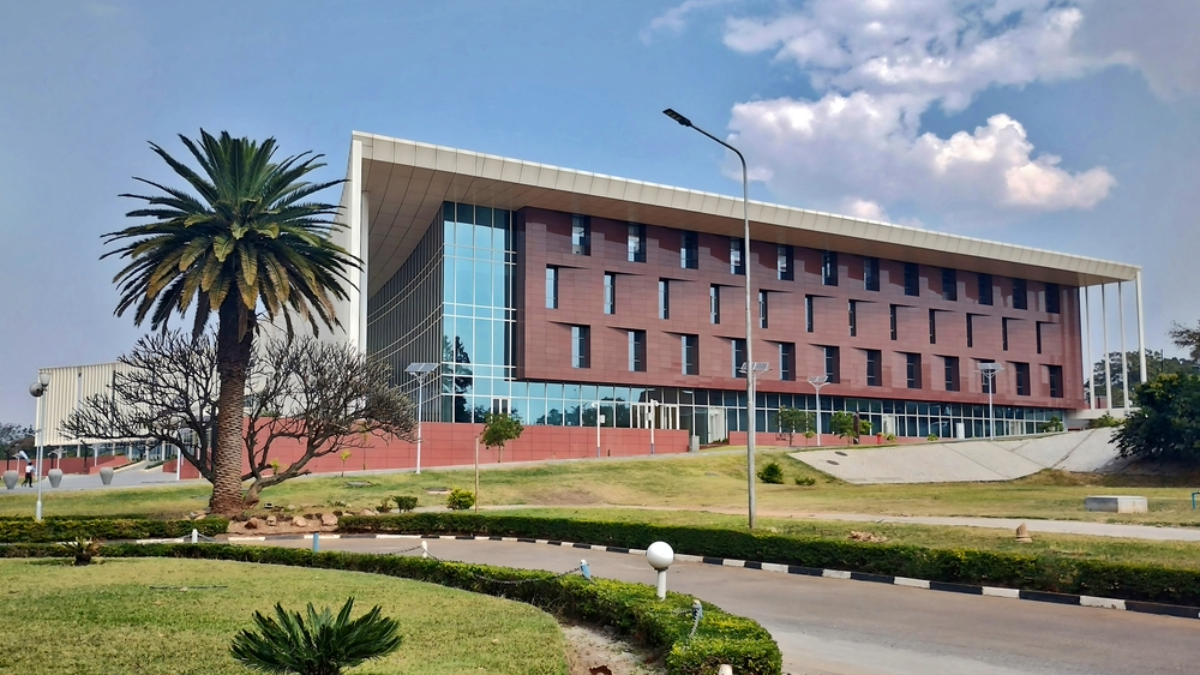
The Mulungushi International Conference Center in the Zambian capital Lusaka, where global digital and human rights conference RightsCon was set to take place May 5-8. Shutterstock
Alejandro Mayoral Baños:
My name is Alejandro Mayoral Baños. I'm the co-executive director of Access Now, and very happy to be here with you.
Nikki Gladstone:
My name is Nikki Gladstone and I'm the RightsCon director with Access Now.
Justin Hendrix:
So I assume you probably imagined on Friday, May, the 8th, you would be rounding out another RightsCon. You would perhaps be preparing for a little bit of much deserved rest and relaxation after putting on an event for thousands of people. That's not what happened.
Where are you both in the world right now and what has the last week been like after RightsCon was effectively canceled? Alejandro, maybe I'll start with you.
Alejandro Mayoral Baños:
Yes. Well, I'm still here in Lusaka, in Zambia and wrapping up a lot of different things with teams and coordinating about next steps. The last week has been very different of what I imagined. Today, I was imagining being in the closing ceremony, preparing my remarks and saying goodbye or see you later to a lot of the community members coming to the event.
My week has been very different in what I expected, of course, with the decision of RightsCon not moving forward. I think my priority has been to being listening to a lot of local civil society and how they were impacted with a decision of this nature, and what are the next steps for them and what are the challenges that are in their minds, now that an event of this nature is not going through.
And also, catching up with a lot of team members because of course, this had a lot of, as I have been mentioning to a lot of them, besides the workload, besides the logistical and of course, the financial impact of not having RightsCon, also on the emotional aspect as well, how the disappointing was for many of them not to meet with their colleagues and to continue the conversations. I think it has been a moment of also, rethinking and reimagining how we see this space moving forward.
Justin Hendrix:
What about you, Nikki? Where do we find you today?
Nikki Gladstone:
Yeah, I'm in Canada. I arrived back in Canada yesterday after having been in Lusaka as things were unfolding. I think for us, RightsCon takes years to organize. We start talking about where it will go next years before it will ever arrive at that host location. And so there's so much momentum and buildup when it comes to RightsCon.
And then to get so close to hosting RightsCon and then to not have the sort of satisfaction of gathering everyone and seeing what all of that work results in, it's a big blow to our team and to the community.
Justin Hendrix:
I understand the first inkling started to emerge around April 27th, that the Ministry of Technology and Science was raising concerns. It appears there was a kind of frantic period, I imagine, sort of 72, 96 hours of discussion.
Take us into that a little bit, to the extent that you can. Describe for us what happened on that Monday, that Tuesday, how those conversations played out.
Nikki Gladstone:
Yeah, happy to. So I received the first indication, I would say, of something being wrong or needing to be resolved on April 27th. I received a phone call from the Ministry of Technology and Science indicating that there was pressure from Chinese diplomats on the government of Zambia to effectively address the fact that there were Taiwanese participants who were planning on joining us at RightsCon.
And that call, while urgent and alarming to receive, we had had such an open relationship with the Zambian government about some of the challenges that could come up in hosting RightsCon in Zambia and about what we wanted to achieve together in our partnership, that as I was boarding that plane, there wasn't a sense of, "Oh no, this isn't something we can return from."
And so when I landed in Zambia, I tried to get in touch and that's when we started to hear rumors of cancellation from folks that were coming in through immigration, and we really jumped right into action. For us, any concern about a specific community or any potential safety implications for us, that's enough to set up a crisis group and try to respond.
And the next three days were, it's hard to even express what it looked like because things were happening so quickly, and we were not able to get in touch with and really hear directly from the government themselves. And so we heard from informal sources, we heard from the media at times about decisions that were being made where we weren't consulted.
And yeah, it was a really difficult and sort of complex moment to navigate, but it did really all start on that April 27th. And then three days later, we had to make the decision that RightsCon wouldn't move forward. And I think when we were arriving, we had no indication from years of partnership that that would be the end result.
Justin Hendrix:
And what was that moment like, Alejandro? Were you all in a room together? Were you looking at one another? It must have been an extraordinary thing to come to that decision.
Alejandro Mayoral Baños:
Justin, just to mention and adding on top of Nikki, just to walk you through my thinking process, there was a lot of indications in Tuesday when we were involving a lot of the diplomats from different missions in Zambia that there were very positive signs. There were very positive signs and we were receiving these informal communications that, "Don't worry. This is going to be resolved."
So we were very positive, and I think in general we were having a lot of calls in the emergency crisis group and everything, but we have a lot of positive indications. I think, and also trying to communicate with a lot of partners, "Don't worry, we're working on it. There is already an emergency crisis. We already know about the rumors. We're trying to manage this."
I think the moment that everything derailed towards the opposite was, and that was already mentioned in our statement, it was when the Ministry of Information and Media made a public statement without actually notifying us, and that's when things were like, "Oh no, there is already a coordination happening that we are not aware."
And when it was very clear for us that the government was not acting in good faith for the event to happen. And that's when being in that group, in that emergency crisis, I was still in Canada, by the way at the time. I was just getting ready to take my flight to Zambia, but we were looking at each other very disappointed, and it was very difficult with the adrenaline of, what does this mean for the organization? What is going to be the impact for the community? How the local civil society is going to impact with a decision like this?
But also, keeping in mind the safety of our community and how that was a top priority for us in making that decision. And it was like, "We cannot delay more, this decision for the safety of our community." And our commitment for that was key.
I think one also, important process we learned a little bit later about the conditions, what were the concerns, official concerns through also again, informal sources and also through the diplomatic missions. And it was a very clear call, like the compromise of our values, like the ban of Taiwanese participants into our conference and also to the content moderation of the event regarding this issue, I think it was a very clear call for us. "We cannot compromise who we are as an organization and as a community," because RightsCon is a community. I think that was a very clear red line for us. "No, we cannot move forward."
Justin Hendrix:
Nikki, you were on the ground in Lusaka, I assume on multiple occasions. I know I've seen pictures of you at least conferring with government ministers prior to RightsCon. You were working with local civil society organization, bloggers of Zambia.
Can you speak to that relationship? Alejandro mentioned the impact on local civil society. What do you know about what it's been like for that group since last week?
Nikki Gladstone:
Yeah, we did many site visits. And having moved RightsCon to different locations, we've learned and continue to learn what is required to successfully host RightsCon. And so that is a signed agreement that's publicly stated with a ministry of the government, that's press conferences and having a local partner that can support us in navigating the context.
And so those are all elements that we've introduced over the years to increase the success rate of implementing RightsCon in these different locations. And I think one of the things that we're really reflecting on, is we got to experience a very different side of Zambia in planning this conference.
We started in 2024. We felt really hopeful from our consultations with local folks and the region that this was going to be a good place to host RightsCon. And we learned a lot about civil society in Zambia through this process, and about their resilience, and their activism, and their advocacy, and the issues that are really top of mind for them, especially heading into an election year.
And I think one of the things that we've said before, but really is worth repeating is, like we feel the disappointment of the community in not being able to welcome the broader RightsCon stakeholders to Zambia to show them what Zambia is like and what they've been working on.
And so because we had such a positive experience for the majority of the time in planning the conference, there is this feeling of loss for Zambia as well in terms of what could have happened and what could have been the experience and the outcomes of RightsCon.
So I think what we are seeing is there's a lot of disappointment locally, and a lot of frustration about what's happened. And then also, a recognition that for them, this is the environment they continue to operate in, and they're heading into an election. And so for us, what's important is that we continue to support them and think through how they can remain connected to our global community, and that we don't leave Zambia and leave them behind there.
And so that's what's really top of mind for us, and we'll continue to work with them and be in touch with them as we figure out next steps.
Justin Hendrix:
Alejandro, you called the situation unprecedented and existential. Just organizationally, is this a financial blow, an organizational blow? How do you deal with this? I mean, I assume there are logistical-organizational impacts that probably haven't been discussed.
Alejandro Mayoral Baños:
Yes, of course. And just to be very open with you, Justin, I think this is part of the conversations that are still ongoing, and especially May 8th. So we are still gathering a lot of information, closing invoices, closing contracts, follow-up with local partners.
I think there is still a lot of analysis to be done. But of course, as an organization, this creates an important reflection moment because as Nikki already highlighted, there is so much that we can plan and we can prevent in doing risk assessments. However, we are in a new geopolitical reality as not just Access Now, all civil society.
And a lot of the reflections internally is how we are going to be reacting to this new geopolitical landscape and how we are going to adapt to this. So this has created a lot of momentum in the organization to rethink about our strategies.
I think we have seen this transnational repression threat in many other topics, themes, but never has been in this upfront and especially with a gathering of civil society. And I think going back to your question of unprecedented, like talking to a lot of partners and even government missions here, they see this as, and this was the word that they used, unprecedented, that they have never seen this coming.
And what it is also creating within Access Now is that now we cannot think just of the local government and how we work with the local government, but also now it's a global ecosystem and how these other actors are also acting on this local government.
And I think what are the strategies that we can do to have allies in other governments, that can support local governments in the case that transnational repression happens? That's why it's creating a momentum within the organization, not just with RightsCon as a event, but as a movement. And what does that mean for the digital rights ecosystem?
Justin Hendrix:
I don't want to ask you to speculate, but certainly in years prior there would've been representatives from the United States State Department, maybe USAID, others who would've been participating. And I assume that US authorities would've been quite dismayed to see something like this happen.
Did you have any communication with the US embassy or other Western embassies that might've been sending representatives? Were there any diplomatic efforts around this?
Nikki Gladstone:
Yeah, absolutely. One of our first steps was to contact some of the governments that send big delegations that support RightsCon to see if there was any way to try to resolve this diplomatically. And so we were in touch with a number of governments that are partners of Access Now, but also have a presence in Zambia, and that includes the US Embassy as well. We were in touch with them.
Justin Hendrix:
And was the US Embassy helpful to you? Were they willing to make communications on your behalf or engage on this?
Nikki Gladstone:
I don't have a sense of what communications they sent on our behalf. I will say the timing was that the US ambassador was also actually departing last week. And so there was a bit of a timing circumstance there, but the person that we did talk to at the US Embassy was really helpful in just informing the context for us and giving a sense of their experience navigating in Zambia.
I would say a lot of other embassies, we worked a little bit more closely with in terms of advocating toward the government, but they were helpful and responsive.
Justin Hendrix:
You already mentioned this idea of having to redo your risk matrix, rethink how you're going to go about assessing where to host the event in future or how to pull it together from a logistical point of view.
Are there already principles that are becoming clear about how to insulate a convening like RightsCon in the future? Are there structural changes you're imagining?
Nikki Gladstone:
Yeah. I think it's a really good question. I mean, I think that thinking through what to do next, the reason that we call this unprecedented and existential is because we had really little power to reverse this decision and this pressure.
We do a lot of work, internally as an organization when we select a location. We have a really extensive multi-year selection process that includes an analysis of multiple countries within a region. We do site visits, we evaluate government receptiveness, we evaluate visa accessibility, travel accessibility.
And over the years, we've learned a lot about not what's just required in the analysis and decision-making, but what's required to maintain the success of the event as we get closer. And I think in this situation, there was really no way to predict what happened, and we're in a position where if we host in some countries, the event becomes inaccessible to folks who need a visa. And if we host in other countries, they may be more amenable to external pressures.
And so I don't know that we have the answer yet, but what we do know is that RightsCon is incredibly important as a space for civil society, that spaces for civil society are shrinking, and that we will need to revisit what is required for us to feel confident and for our community to feel confident and invest in a space where we convene. And so that's definitely something that we are thinking about and considering, moving forward.
And part of the reason that we put out a survey as soon as we put out our statement was, what do people want from us, because RightsCon has always been built by our community, and we don't want to take any next steps without being informed there?
Alejandro Mayoral Baños:
And now also, as I was mentioning before with this new geopolitical landscape, we need also to be closer to our allies and really thinking about, what is the support that governments and international organizations can do to protect civic space?
I think now it's not just about statements. It's about what are the other actions that they need to take in order to protect these type of spaces.
Justin Hendrix:
Nikki, I'm sure there are so many things that you were looking forward to announcing, unveiling, seeing take place in Lusaka. And there's always surprises from the stage. There are many great discussions, panels, so many things that literally built in order to announce at RightsCon from the community. Are there a few things you had in mind that you want to shout out now?
Nikki Gladstone:
Yeah, that's a good question. It's almost hard to pick because there were 550-plus sessions that, I think each added a unique value in person and online to RightsCon. I think in this moment, what I would say is I really encourage folks to connect with and be in touch with organizations that are in Zambia and in the region.
It was a really long road to get here. We made a commitment in 2023 to host RightsCon in Africa. We did over 20 consultations with our community to think about, how do we bring RightsCon to Africa in a way that serves the region?
And yeah, it was a long road to get to the program. And really, I think we were in a place where we were really proud of what we had put together because it was so informed by our local, regional, and global community. And so I think I share in the disappointment that a lot of folks feel in not being able to showcase that. And I would encourage folks to check in on social media around the community.
I think a lot of folks are trying to spin up other sessions or ways of meeting and connecting. And I think that's really beautiful and powerful in a moment where our space is taken away for the community to show resiliency in terms of how they showcase their work even in the absence of that space.
But I think knowing how closely we worked with local civil society and how much excitement there was from Zambians about the possibility of hosting RightsCon there and what it meant for their work and showcasing their work, my biggest call to action would be to familiarize yourself with the local civil society and the important work that they do because wherever we head next, we'll be sure to center their perspectives.
Justin Hendrix:
Alejandro, what about you?
Alejandro Mayoral Baños:
I think in the broader sense, I think how digital rights now are human rights, and how now this is intersecting in many different groups, movements, civil society groups. I think this incident in Zambia is highlighting this, and how other movements are seeing these trends in this new geopolitical reality.
And I think one important highlight and I think is very evident to a lot of unconferences that happen around this moment in RightsCon is about the cross-movement collaboration and information sharing. I think the strategies of the labor movement, the strategies of the land rights movement, the Indigenous movements, we have a lot to learn from that as the digital rights movement. And I think it's a very key moment for all of us to start listening what other movements are doing in these moments of challenges in the geopolitical landscape.
Justin Hendrix:
This may be silly to even mention, but one of the things we were planning to do at Tech Policy Press at RightsCon this year, in addition to the couple of sessions we were participating in was to collect recipes. We had a little program set up where we were going to pass out a card with a QR code, invite folks from around the world to submit recipes.
The idea was basically, it's a tough time out there right now. So many of the conversations we're in are difficult. Financial spaces are shrinking, the physical space is shrinking, the political space is shrinking. What do we do to nourish ourselves? And so we're still thinking about that and still hoping to get that out there, create a little community, find a little warmth.
But I'm wondering what you all are doing to nourish yourselves after this experience. Alejandro, you already mentioned the team. It's been a rough one. What will you do to pick up the pieces in the next few weeks?
Nikki Gladstone:
Yeah. I think maybe just to say, I think that's such a perfect example of what is hard to articulate about what happens at RightsCon is that these connections happen and they're not all work-related, but they help nourish us because we're all operating in really difficult environments.
And so to be able to come together and share in community in a way that does nourish us, I think is so important and it helps fuel the work. And so I really hope you're able to do that. And if there's ways for us to support, I'd love to.
And maybe just to your question, one of the things the RightsCon team is doing right now, and we're hoping to unveil it later today, but is to put out a full page of all of the impact statements that have come in, and the statements of solidarity. And that, for us has been incredibly energizing.
It's really powerful to see across the globe, many organizations and individuals across every sector saying, "This is our space. It's important to us. We need it and it won't be taken away." And I think it just shows the resiliency of this ecosystem. And so for us, that's been really energizing to look at that, look at the survey results and just be in awe of the community and their response to what's happened here.
Justin Hendrix:
Alejandro, can I give you a last word on that?
Alejandro Mayoral Baños:
Oh, yes. I think what happens in the aisles of RightsCon, it's something that is, as Nikki said, it's very difficult to measure, and every iteration is different. It has their caveats. I think there is an important loss there, and especially for local and regional partners.
So I think, as Nikki said before, any type of engagement with local civil society and how they can continue being part of the conversation, and that is something that is top of mind for us. But also, we would like to really ask the community to do that as well because many of them already shared with me, "This was going to be my first RightsCon. I already have all these things that I was planning to do."
And as you had the recipe idea, they had tons of ideas that they wanted to play around. So yeah, that encouragement to the community to help us to support local civil society.
Nikki Gladstone:
I really think this is an important moment for not just Access Now to think through what happens next, but for all of us to come together and really decide what our spaces look like moving forward and how we make them more protected and resilient.
And we're hopeful that the attention that this has received from the media and from high-level government officials results in commitments to protect these spaces because I think we're seeing how fragile and targeted they are and also how important they are. And we're going to need all of the help that we can get to maintain them.
Alejandro Mayoral Baños:
And I think one important thing that I want to highlight to the entire community is that we, and this is the vision that Arzu, Nikki and myself, we are trying to convey is that RightsCon is not just an event that happens during four days every year. For us, RightsCon is a movement. So how we are building that space and continue evolving with a very volatile landscape. I think this is an effort that we need to come together as a community. We don't see that we are just the owners of the space, but this is a community-owned effort. And I think we have seen that with the statements, we have seen that with the impact. But how we are reimagining that, it's going to be very important.
Of course, we have the survey as the first immediate action for the community to act on that, on informing the next steps, but of course there are going to be different moments of input for all of us to really reimagining this space moving forward.
Justin Hendrix:
I will direct my listeners to those lists, those surveys, those other opportunities to engage with Access Now. I hope to see the two of you in person soon. I thank you very much for taking the time to speak to me about these things.
Alejandro Mayoral Baños:
Thank you, Justin.
Nikki Gladstone:
Yeah, thank you so much for having us.
Authors