OpenAI’s Model Card is a Great Step Forward for Child Safety and Transparency
Alexandra A. Rodriguez, J. Nathan Matias, Camille François, Margaret Mitchell, Juliet Shen / Nov 24, 2026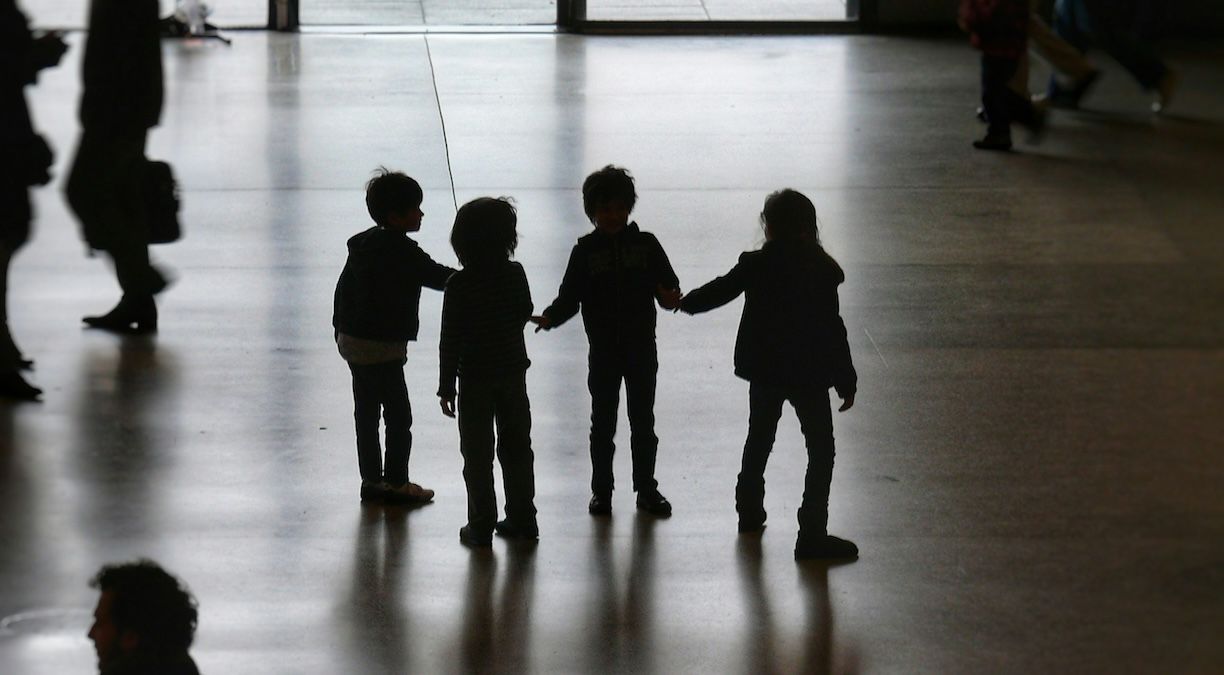
Photo by Pavol Svantner on Unsplash
OpenAI released a new image classifier for child safety this month, making a rare move in a field that has traditionally offered very little transparency: publishing a model card with evaluation details. Such clarity has been sorely needed but alarmingly absent in online child safety technology, where platforms have relied on fewer than a handful of opaque classifiers to identify previously unidentified child sexual abuse material (CSAM). Despite calls for evidence on the effectiveness of these models, their creators have been slow to change and reluctant to be the first mover. So what can we learn from OpenAI's transparency, and does it truly advance child safety?
As we explain below, OpenAI's act of transparency does advance child safety. For the first time, we have the critical information needed to use a child safety system as effectively as possible and make further improvements.
To unpack this, it’s important to understand what the technology is and why it matters. A core task in child safety work involves addressing CSAM images, which are a crime to possess in most places around the world, and revictimize the children impacted each time they are seen. Paired with hash matching, which compares image uploads against digital fingerprints of material that has already been identified and verified, models like OpenAI's classifier estimate whether novel images might be CSAM. These models are part of systems used widely by tech organizations, government, and child safety NGOs for many different functions: analyzing reported illegal content, prioritizing cases, identifying victims and filtering uploaded content on social media to prevent the dissemination and proliferation of material. Child safety models also help to protect investigators from the mental health risks of high-volume exposure to traumatic content.
Why child safety model cards matter
While model cards have become a standard tool for reporting AI capabilities, the field of child safety has moved more slowly to embrace model transparency. These cards report the process and data behind a model's training, share metrics on its performance, and outline its strengths and weaknesses for specific uses.
Such transparency is urgently needed to improve cooperation on child safety (and we've previously written more about why here). Critically, information about how well models actually work helps organizations build more effective safety pipelines, guiding everything from where to set detection thresholds to when to bring in human review. It also helps AI developers identify specific areas for improvement and points researchers and science funders to the areas where innovation is most needed. Over time, this shared information can help the field agree on standardized metrics, so we can accurately track whether child safety is improving.
One major obstacle to transparency within companies is the concern of attracting criticism or even liability. No system is perfect, and candid disclosure about performance shows us how kids can fall through the cracks. Let’s be clear: It is not okay for any child to be missed because of poor system performance. That’s why risks need to be disclosed. Hiding them doesn’t make them go away. Without transparency, it will remain impossible to tell whether a given system is better, worse, or on par with others. We expect gaps and biases; we need to know specifically what they are in order to address them and measure progress. That's what makes OpenAI's transparency such an important first step.
How OpenAI has documented its CSAM image classifier
OpenAI's CSAM Image Classifier model card discloses information common to many model cards. It describes the model's architecture, explains its intended use, defines the categories it uses, provides basic details about training and evaluation data, and reports model performance. A partnership with the National Center for Missing and Exploited Children enabled them to train and evaluate the model on access-controlled data from past cases. The documentation provides substantial detail on precision and recall trade-offs, metrics that are relevant for all classifiers, especially high-risk models like this one.
By reporting performance across estimated age, race, and sex, OpenAI has pulled the curtain back on disparities with potentially serious consequences for children. Based on the model card published, the main CSAM detection signal correctly flagged approximately 61.3% of CSAM-positive images tagged as Black, compared to 84.5-90.3% for the other reported racial groups, a gap of roughly 23–29 percentage points. If the test set is true to life, images of abuse involving Black children could be more likely to go undetected, leaving those children less protected by the systems meant to keep them safe.
What does this mean for child safety at large? The lower detection rates for Black-tagged images raise serious concerns about unequal protection. Since other model developers do not publish model cards, it is impossible to know if they perform better. OpenAI deserves credit for making this disparity visible, and should be expected to investigate its causes and demonstrate improvement. Researchers have documented demographic disparities for years in both text moderation and image filtering. Given this history, it is reasonable to expect that similar demographic biases exist in other child safety classifiers, making unequal protection a persistent and urgent challenge that every provider should be expected to investigate and address.
If other areas of image recognition are a guide, greater transparency has led to a reduction in racial bias. Since OpenAI depends on datasets provided by third parties, this first-of-its-kind model card lays out a challenge for the whole child safety ecosystem. Classifiers developed using other training data, like those that use the UK’s Child Abuse Imagery Database (CAID), likely have different performance altogether. We need to work together to improve everything from the classification system (US racial categories are not a measure of biological phenotype) to model performance across age groups.
For those seeking to improve child safety, the sections on limitations and evaluation are particularly valuable. These sections explain how the model is affected by issues in the broader field, such as the lack of standards and the difficulty of working with highly-sensitive data. The card also describes areas where further research could make substantial improvements, such as accounting for images of the same person as they get older.
The future of model transparency for child safety
OpenAI has made a fundamental contribution to child safety in the long term by publishing this model card. By reporting an unprecedented level of detail on the definitions, performance, and limitations of its model, OpenAI has taken an action that will accelerate safety innovation. Their model card encourages responsible use, sets a benchmark for the field, and highlights important areas of future research. If other model creators do the same, we could turn a corner in the search for verifiable progress on child safety. The progress enabled by this transparency could finally ensure that our child safety technologies protect all children.
Authors