Tech, Power, and the Struggle for American Democracy
Justin Hendrix / Jul 5, 2026
Good morning!
The July 4 fireworks ended in my neighborhood in Brooklyn at about 6 a.m., so do forgive any errors I may make in this edition of the newsletter.
I celebrated the day with my family at the main branch of the New York Public Library, where we viewed a copy of the Declaration of Independence handwritten by Thomas Jefferson. It was one of the copies he sent to friends after July 4, 1776, to communicate how the final version adopted by the Second Continental Congress was different from his text. This version contained objections to the slave trade, even though Jefferson was, and would remain throughout his life, a slaveholder himself.
This July 4, like many of you, I find myself thinking about the trajectory of the struggle for American democracy. In its latest democracy report, the V-Dem Institute downgraded the US from the status of ‘liberal democracy’ to that of an ‘electoral democracy’ for the first time in 50 years. "Under Trump’s presidency, the level of democracy in the USA has fallen back to the same level as in 1965," V-Dem concludes. "Typically, autocratizing countries of the 'third wave' have taken about a decade to make such a deep dive, and the speed of decline is comparable to some coups d´états."
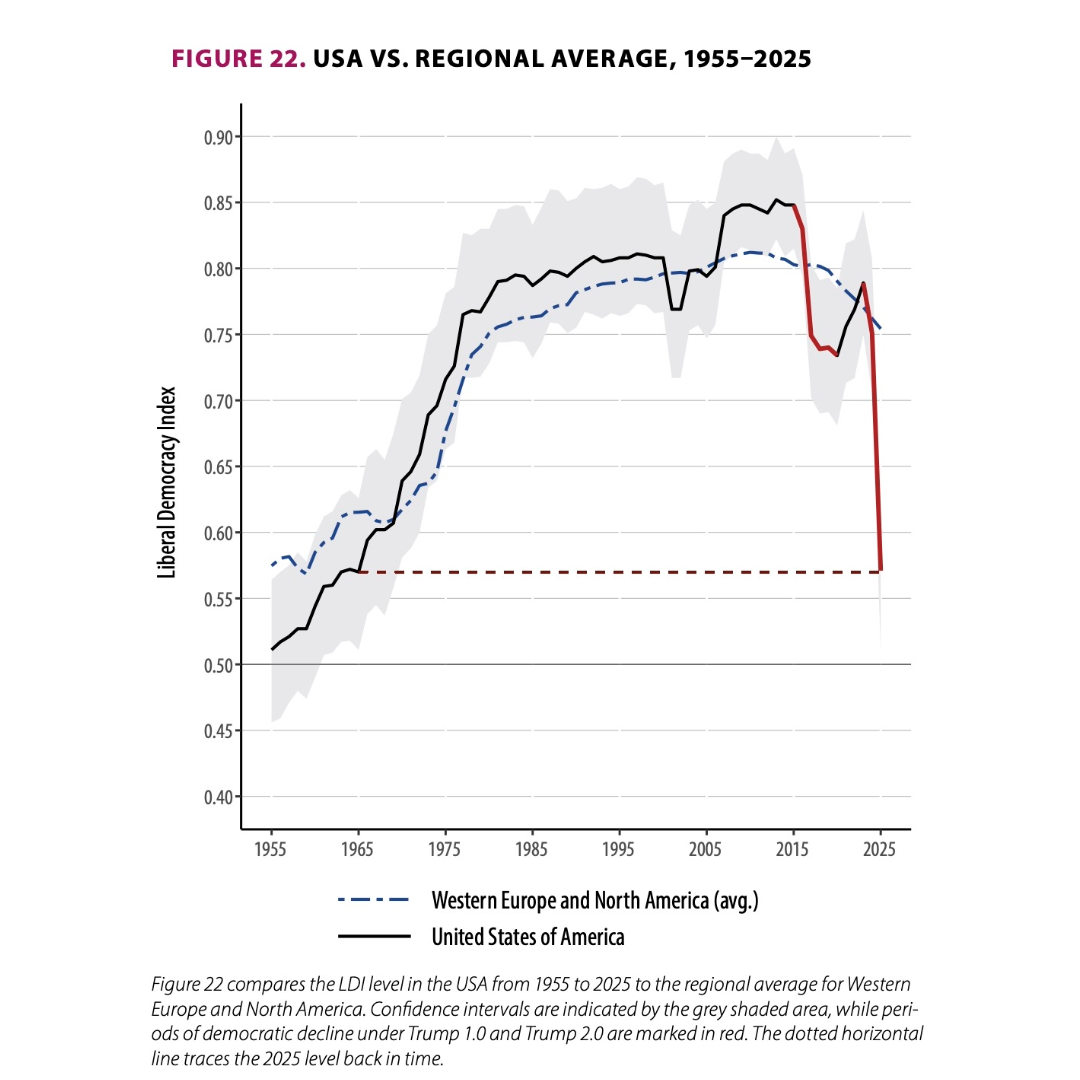
Figure 22 (V-Dem Institute Democracy Report 2026).
The question on this 250th year since the Declaration was signed is whether we can arrest this freefall, or whether it will continue. It seems unlikely any particular electoral outcome will magically stop the overall direction of travel, though elections may slow the rate of decline. Whether America remains an electoral democracy or can one day reclaim its status as a liberal democracy and be in a position to continue the struggle towards freedom and equality will depend, in part, on how we govern the relationship between technology and political power.
This is, of course, not just a question for the US, but for the world, and I’m grateful to all of you in the Tech Policy Press community who are working on it.
Can Geneva deliver or is it just talk? The UN Global Dialogue on AI Governance
Speaking of the community, many of you are en route or already in Geneva for the UN’s first Global Dialogue on AI Governance, which kicks off tomorrow. We had a number of pieces considering the prospects for the Dialogue and what it should try to accomplish:
- The UN is the only forum where every member country has an equal seat, write Michael L. Bąk, Supheakmungkol Sarin, and Adrian Mak of AI Safety Asia. But the Global Dialogue on AI must produce architecture, not just principles, they argue: “The Dialogue's value will not be measured in declarations. It will be measured in what gets built afterward, by whom, and for whom.”
- Ahead of the UN's first Global Dialogue on AI July 6–7 in Geneva, Konstantinos Komaitis, resident fellow at the Democracy and Tech Initiative at the Atlantic Council, argues the central question is how to navigate the geopolitical moment: can nations still cooperate on AI amid increasing strategic competition?
- AI systems are "at their core, a technology of expression and access to information,” writes Isabelle Anzabi, research associate at The Future of Free Speech at Vanderbilt University. How governments govern the technology will shape what people can say, seek, and know—and the UN Global Dialogue on AI Governance in Geneva is where Anzabi says the world can get that right.
- The UN Global Dialogue on AI Governance should tackle the systemic disadvantage faced by users of AI systems in low-resource languages — a real need not being solved elsewhere, writes Christian Schlaepfer, a former Swiss diplomat and negotiator of tech and AI policy at the United Nations.
- “Geneva offers the governments, scientists, and civil society organizations gathered this week the opportunity to turn responsible AI from a catchphrase into a roadmap people can see, measure, and hold us to.” The UN's Scientific Panel on AI, which released its preliminary report last week, is designed to build an evidence base that policymakers must translate into action, writes Rebecca Finlay, CEO of the Partnership on AI. This mechanism will be crucial to addressing the concerns of a wary public, she says.
- Next week in Geneva, the inaugural UN Global Dialogue on AI Governance convenes alongside WSIS. Jhalak Kakkar, executive director at the Centre for Communication Governance, Jason Pielemeier, executive director at the Global Network Initiative (GNI), and Elonnai Hickok, GNI's managing director, argue the UN cannot afford to ignore two decades of internet governance lessons.
The children’s online safety debate continues
- On Monday, the US House of Representatives passed the Kids Internet and Digital Safety (KIDS) Act, a sprawling collection of measures aimed at mitigating online harms to minors, in a 267-117 vote. The bill will now head to the Senate, where it reportedly faces long odds, writes Tim Bernard, a tech policy analyst and writer.
- “This idea of a ‘presumptive’ ban on social media — whereby platforms would be banned for teenagers until and unless they can demonstrate to a regulator or similar such body that they are safe — satiates the political appetite for access restrictions while recasting them as a lever for safety-by-design.” The presumptive teen social media ban is gaining traction as the only viable alternative to a hard ban. But Owen Bennett, an independent tech policy expert, argues it's a proposal made for a regulatory world that doesn't yet exist.
- What is currently missing from the discussion is the hidden children's rights and human rights cost of mandatory age assurance, write Emma Day and Sabine Witting of Tech Legality.
EU tech sovereignty and the illusion of independence
- Europe's AI industrial strategy assumes cloud capacity and AI demand can be addressed separately. Frederike Kaltheuner and Leevi Saari of the AI Now Institute argue that framing misses how the two are structurally entangled. “AI sovereignty is not separate from the existing cloud market dynamics Europe has failed to grapple with. It is intricately connected in ways that simply boosting supply and demand separately can’t solve,” they write.
- Europe says it wants tech sovereignty, write Cecilia Rikap and Vali Stan of UCL’s Institute for Innovation and Public Purpose. But if the European Commission truly wants Europe to “act independently in the digital world”, they argue, it should start by freeing itself from Big Tech’s epistemic capture. This piece is part of our ongoing series on Hype Studies.
AI, accountability, and drawing the line on data centers
- The United States government may reject a company's terms. What it may not do, argues Loyola Law's Simona Grossi in this reflection of the Anthropic-Pentagon dispute, is "weaponize the machinery of national security to destroy a business for holding a view on a matter of public importance."
- US communities are winning fights against data centers — but Vignesh Ramachandran, PhD candidate in Geography at the University of Wisconsin-Madison, and Inayat Sabhikhi, associate director of the Technology and Society Project at Bard College, warn that "stopping data centers in the US means little for the planet if they simply shift to Global Majority countries."
- June was marked by "an unprecedented expansion of federal oversightover frontier AI," write Rachel Lau, Shirley Frame, and Ben Lennett—an executive order on model review, export controls on Anthropic, and limits on OpenAI's GPT-5.6 rollout. More in the June roundup from Freedman Consulting & Tech Policy Press.
The courts weigh in
- The United States Supreme Court just effectively gutted two key laws for suing tech over human rights abuses, says Tech Justice Law's Madeline Batt. The result in Doe v. Cisco leaves companies and executives "less constrained by liability fears"—and victims with fewer pathways to redress.
- DOGE fed grant descriptions into ChatGPT and rubber-stamped the outputs. A court said that's the government's own conduct — not the chatbot's. Jordan Ascher explains why the case, American Council of Learned Societies v. National Endowment for the Humanities, is a landmark for AI accountability.
Navigating the current information environment
- From Chile to Brazil to the US, elections are "fertile ground for disinformation," write Amnesty International's Marco Perolini and Daniel Joloy. They make the case that fighting back requires far more than regulating platforms. “Supporting fact-checking, facilitating transparency and access to information, strengthening privacy protection frameworks, and investing in digital and media literacy are central to combating the use of disinformation as an authoritarian practice,” they write.
- Former FTC attorney-advisors Gaurav Laroia and Charlotte Slaimanargue that a massive public education campaign—a 'Truth Campaign' for the AI era—is needed to equip everyone with the knowledge and means to live with AI.
On AI agents
- Camille Stewart Gloster, the CEO of CAS Strategies, LLC and the former Deputy National Cyber Director for Technology & Ecosystem Security for The White House, Numa Dhamani, an engineer and researcher working at the intersection of technology and society, Maggie Engler, who fights platform manipulation at Twitter, and Leah Ferentinos, an AI Governance Researcher and Strategic Advisor to All Tech is Human, argue that capable agents won't be enough. Winners in the 'agent economy' will build agents that act in customers' interests, navigate autonomy responsibly, and remain accountable when decisions affect real people.
What we’re watching
Missed last month's discussion with Brandi Geurkink, Courtney Radsch, PhD, and Mark Scott on barriers to data access and threats facing independent tech researchers? You can watch it here. Plus, stay tuned for the next season of the "Digital Governance for Democratic Renewal" webinar series, returning in the fall. In partnership with Columbia World Projects and the Centre for Digital Governance, we'll continue exploring how to redesign the digital world to strengthen democracy with leading researchers, technologists, and civil society advocates.
We’ll be watching the outcomes of the UN dialogue this week, as well as whether the Trump administration will release new guidance on AI safety standards. We invite contributions on these issues and more.
I wish you all the best for the week ahead!
- Justin
Authors