Natasha Singer Details Tech’s Grip on Public Schools
Justin Hendrix / Oct 11, 2026Audio of this conversation is available via your favorite podcast service.
In the daily surge of news and headlines about technology, it can be hard for any journalist to fully contextualize the individual events they are reporting on and trace the underlying patterns, structures, and ideas that are producing them.
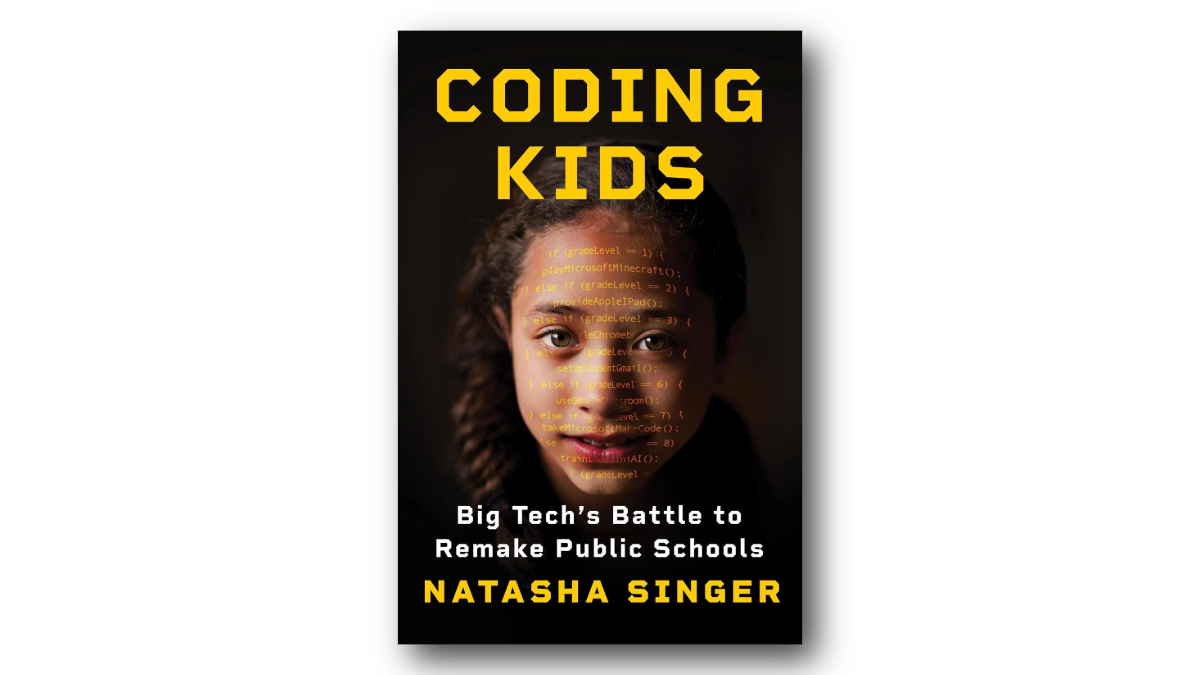
Today’s guest excels at just that, covering one of the most complicated beats in technology journalism. Natasha Singer is a technology reporter for The New York Times, where she has spent more than a decade investigating how big tech shapes public schools. Her new book is titled Coding Kids: Big Tech’s Battle to Remake Public Schools, published by W.W. Norton.
Natasha Singer:
I'm Natasha Singer. I have covered tech in schools and the tech industry influence in schools for the New York Times for more than a decade. And I am the author of a new book about this called Coding Kids: Big Tech's Battle to Remake Public Schools.
Justin Hendrix:
This book has been a culmination, I'm sure, for you of the reporting you're doing also comes at a fascinating time. There's so much happening on this beat, and I'm hoping we'll get to talk about some of the news and events that have occurred just in the last few months, even here in New York where we've seen a moratorium on AI in the classroom. Los Angeles has a sort of similar moratorium. There's so much happening across the country. I'm so excited to talk to you about this. But I want to ask you first, you share in the book a couple of details about your personal motivation around this topic, covering these issues, the home life where you say Einstein and Euclid were gods, that you were surrounded by people who made education their vocation. Tell me a little bit more about just where Natasha Singer comes from.
Natasha Singer:
So I grew up in Massachusetts and my dad was a math professor at MIT for decades. And my mom was first a teacher and then a therapist for kids with Down syndrome. And my siblings are in education. And basically, I think if you grow up in a family of doctors, being a physician and being in a helping profession is something that is of value. And if you grow up in a family of entrepreneurs, being entrepreneurial is a value. And if you grow up in a household with educators, asking questions is a value. And so we did grow up in a sciencey household and the household gods were Einstein and Euclid. But more than that, being able to ask a good question is important. Being able to question assumptions is important. And then how do power hierarchies affect society and humanity and being able to deconstruct power hierarchies and think about what is good for the populace, for communities and for civics.
So that definitely informs my reporting. My favorite part of my job at the New York Times is when I get to go into schools and talk to teachers and students and see what's happening. I like to go to a school at seven in the morning before the bell rings and spend the whole day and then leave afterwards because if you just go see one class where they're using AI, you don't understand anything about what's happening. And I think my book is an investigation of how big tech companies like Google and Microsoft are reshaping education. But the best chapters of the book for me and the heroes of the book for me are teachers who are trying to navigate this big tech influence and think about what's in the best interest of kids. Because for a long time, schools have reoriented themselves to what's in the best interest of tech companies.
Justin Hendrix:
Well, I was recently talking to a friend of mine, a fellow called Chris Wiggins, who's been a data scientist in both the media industry — he was the data scientist at the New York Times and is now elsewhere. He teaches, of course ,at Columbia University, as a professor there. We were talking about the enormous institutional and policy edifice that's been created around computer science and computer science education and teaching people to code, et cetera. And we were talking about what in the world might happen to that edifice in the age of AI. And this was before I had read your book. And so when I opened your book and I started to read, I realized, oh, here are the answers to this question that we were fumbling around with. This person has done the work. They have gone and looked at the recent history of this is issue and put the pieces in place.
But I want to ask you maybe for the listener, I don't want to retell the entire book. You start in a couple of different places with this. You go all the way back to Thomas Edison in 1912 at one point, but you also start with someone else, Jane Margolis, a little further back. And maybe just tell us where you start when you think about this topic or the role of tech in shaping how students learn and particularly how they learn about computers and about coding.
Natasha Singer:
So just to set the wider context, and then I will tell you about why I chose coding as one of the narrative spines. Because I've covered tech in schools for more than a decade, you see these cycles and you see the tech industry come in and say to schools and governors and parents and state legislators and presidents of the United States, "We have this new technology or this new tech subject, and it's going to transform education and it's going to democratize learning and it's going to improve outcomes and it will give kids valuable career skills." And you can start in the 1980s when Steve Jobs started saying, "Apple has these new desktop computers, and if we just get Apple 2E computers in every school, kids will be more creative and they'll drive their own learning and they'll learn valuable career skills." And that was in the 80s.
And then in the 2010s, Google comes along, says, "We got these Chromebooks and they're these sturdy, inexpensive laptops. And if we just give every kid a Chromebook to take home and use how they want and at school all day long, democratize learning and it'll make education equity much better and it will give kids valuable career skills." And so we see them going from hardware to software to then if we just teach every kid to code, they will learn really valuable thinking skills and they will be able to be entrepreneurs and they'll build things and they will be magiced into six figure high power jobs at big tech companies and they'll be able to change the world. And so we've seen schools for decades who really are desperate for resource for kids, but also who want to prepare kids to function in society, rush to adopt to whatever the tech industry is selling.
And so I chose computer science as one of these narrative spines because the tech industry used social media and other tools to create a huge audience for coding. The book opens with Code.org, which is a nonprofit group based in Seattle, and they want to get coding in schools and the intentions are good. The founders of code.org studied computer science at Harvard and went on to get high powered, high paying jobs and start startups and be angel investors in Facebook and Dropbox and others. And they felt they had been successful in part or largely because of computer science and they wanted kids to have the same opportunity, but they were also on the business side of the tech industry and they saw that Microsoft and Google and startups were competing to hire the best programmers from Harvard and Stanford and they wanted to grow more coders.
And so they made this viral video starring Bill Gates and Mark Zuckerberg and other tech billionaires, but also cultural figures like will.i.am, the Black Eyed Peas singer. And the video was called What Most Schools Don't Teach. And it was like this fast-paced montage of these billionaires saying, "If you just learn to code, you'll have all these opportunities. And the problem is just that we can't hire you fast enough and schools are falling down on the job and they're depriving kids by not teaching coding."
Justin Hendrix:
And the video … so this is 2013, this is a YouTube video that goes viral, and this is in that still moment of we're in the Obama era, we're in this kind of golden moment of tech is going to lead us into Valhalla.
Natasha Singer:
This is a period where we're optimistic, where the tech industry was saying every kid deserves to be the next Mark Zuckerberg. And we though that was a good thing. And the video didn't go viral by accident. Google promoted it on YouTube and Microsoft promoted it and Bill Gates promoted it and Snoop Dogg promoted it. It was engineered to go viral and it did. And it did a lot of good. It made coding a household word in families that had school-aged kids. It made schools think to themselves, actually, we don't teach computer science. Elite schools who had the ability to hire people who had studied computer science in college and had maybe already been in tech and now wanted to do something to give back could teach computer science in a high school. There were also folks teaching computer science who had been doing it for years, but most schools didn't teach computer science.
And so it really drove this movement of computer science is the subject of the future and we have to teach it. And then Code.org came back with an even bigger achievement. They created this thing called The Hour of Code. This is also in 2013. And the idea is we'll get kids around the world all at the same time just to do an hour of coding. And they created really fun hour long tutorials, sometimes like with Elsa, the princess from Frozen, and sometimes with Star Wars characters, sometimes with Angry Birds, they got the license to do these things. And kids love these icons. And so it was a really fun thing to do in schools and it made kids feel like actually maybe computer science is not so scary. So tens of millions of kids did this and it's become this incredible kind of annual school holiday, but also it ushered in this kind of commercialism.
There was the Google hour of code and the lesson is code your own Google logo. So you've got the Google letters and the Google colors and then you could code them to spin around or bounce up and down. And Microsoft, which owns the Minecraft game, had the Microsoft hour of code and Apple had the hour of code where you code in Swift Apple's programming language. So it also ushers in a much more commercial version of computer science in which tech companies are providing the curriculums and training teachers. And so I used this as one of the narrative spines of the book because you see how the tech industry goes from state to state lobbying state legislators first to pass laws to require schools to teach computer science. Then some tech companies in some states sat on the committees that decided what the standards were for computer science education in every grade.
Then some of them trained teachers or they funded third parties to train teachers. Then they provided the curriculum. Amazon has this curriculum, it's called Amazon Future Engineer, and there are various virtual tours you can take. You take the Amazon tour of a warehouse with robots and it's all about how great the robots are. But the questions in the Amazon curriculum are like, how many packages do you think our robot can pick in an hour? And it shows you the depth at which the tech industry was able to both sway what subjects schools are teaching, but also how it is taught and what is taught. And it shows you how companies like Google and Microsoft are able to affect nearly every step of the education supply chain. And we don't see that with any other industry in public schools.
Justin Hendrix:
And one of the things that I think I was kind of struck by a little bit was this idea that you have certain characters who are very good at selling the idea of the necessity of building this tech curriculum into education across the country as a kind of national priority, positioning it as a crisis even, and one that may effectively set the United States back and cripple its economic hegemony. You point to Brad Smith in particular as a character who's particularly adept at making these types of arguments on Capitol Hill and then presumably other capitals across the country.
Natasha Singer:
So again, one of the super interesting things is there are historical examples. This wasn't the first time. So we talked about Steve Jobs in the 1980s saying we need to get a computer in every classroom, a computer in every school. And Steve Jobs goes to Washington and tries to get Congress to pass this bill that would give computer manufacturers a tax break if they donated computers to schools. And he called it the Kids Can't Wait Bill because it was urgent. And Congress doesn't end up passing the law because the taxpayers would end up spending more on computers with this rebate for computer makers than computer makers would be in donating the computers to schools. But Steve Jobs gets California to pass this law under the sense of the kids can't wait till they're grownups to use a computer. The kids must learn to do this.
And it was a moment where Japan was surging ahead in electronics and the United States was worried about falling behind Japan. And so there was this feeling of, yes, we actually have to get computers in the classroom because otherwise we won't be able to compete with Japan. It became a national priority. And that's when you started to see IBM and RadioShack and Apple and others compete to get their computers into schools. And we started to see schools put in these computer labs where there would be dozens or hundreds of computers. And so again, every decade there's some other thing that's a national priority or we will fall behind. And so the argument for computer science that a number of tech leaders made, including at Google and Brad Smith at Microsoft, but Tim Cook at Apple made the same argument to Trump at the White House in a public meeting that if we don't teach kids computer science, then the biggest companies in the United States, the innovation envy of the world, Apple and Google and Microsoft and Amazon won't be able to hire enough talented employees and we won't be able to compete and we won't be able to innovate.
And so there was this feeling of “It's urgent. We have to teach every kid to code for the good.” I mean, and Obama made a video saying, don't just play on your phone, program it because the United States needs you. And so now we're hearing the exact same argument for AI. If we don't teach every kid to prompt a chatbot, China will win the AI race. And so again, one of the reasons I wrote this book is it feels to me like we have collective amnesia, that we have these cycles every few years in which the tech industry has a new product or a new subject they want to get in schools. The argument is the same. Urgency, got to compete globally, got to train students for the future. But the problem is, again, if you look at this push for computer science, and I just need to say you've read the book, my book argues in favor of computer science.
I think it can be rigorous. I think it teaches logic and sequential thinking and problem solving, and it teaches you to make stuff and it can be fun and creative and all the things. It also argues for a much broader way of thinking about what computer science and tech education is. But if we just hold that for a sec, we got all these kids excited about coding, and now the same companies that pushed for Chromebooks and coding have pivoted and they're pushing for AI in schools. And you have a generation of kids who then learned to code, did the hour of code, then they taught themselves how to build websites. They took advanced placed computer science, advanced placement computer science in high school. They went on to major in computer science in college, and some of them are now really struggling to get jobs because major tech companies and smaller ones are urging and encouraging software engineers to use AI coding tools like Replit or Claude Code or OpenAI, ChatGPT, Codex or whatever.
And so if you can generate masses of code with an AI, then you have less need for junior right out of college programmers. And so what do we owe this generation of kids who we sold a story about learn how to code and you'll be magic-ed into high-powered, high-paying jobs and you will get to change the world?
Justin Hendrix:
So I want to pick up on that theme very much and talk about the present AI moment. But before we move on from that, I want to make sure to just ask you about some of the voices that you detail in the book who were effectively arguing against the emerging status quo that the tech industry and others who were more closely aligned to it were developing. You point to people like Jane Margolis, colleagues, Barbara Lazarus, Alan Fisher. And then on down the line, I want to ask you about a handful of the teachers who you do talk about who also have a very different point of view about how this type of education should happen. But let me just give you that prompt. Some of these voices that effectively from the outset, from the very beginning, kind of looked at the impetus in industry to push coding and computer science curriculum into all schools and saw something wanting there.
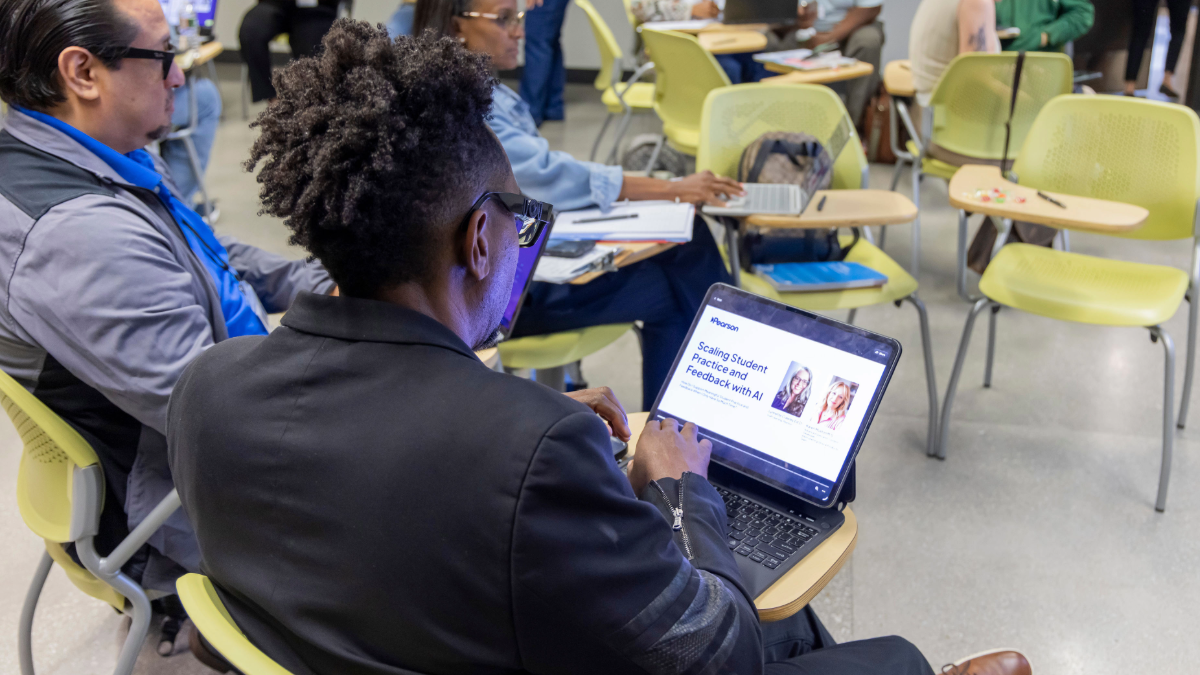
Teachers attend an artificial intelligence professional development and certification program hosted by learning company Pearson on August 7, 2026, in Miami. Nearly 200 teachers from Miami-Dade County Public Schools participated and are now working toward a verified AI credential as they begin the new school year. The program is part of Pearson's commitment to expand AI learning opportunities for teachers nationwide through the White House's "Pledge to America's Youth: Investing in AI Education." (Jesus Aranguren/AP Content Services for Pearson)
Natasha Singer:
Right. So there were hundreds of people, researchers, teachers, professors working on trying to get computer science education into schools before code.org showed up with its ability to capitalize on viral marketing and other startup methods to make coding a phenomenon in schools. And one of them was Jane Margolis, who was a researcher first at Carnegie Mellon, and then she moved to Los Angeles where she was an education researcher at UCLA. And she viewed this through the lens of power, that big tech companies had enormous power, that computer science was the medium which was shaping society, that software was a way to steer human behavior. And she saw that the folks leading these companies were often white or Asian men. And if you looked at the data, the majority of kids majoring in computer science were white and Asian men, same with the demographics of kids taking computer science in high school.
And her view is, unless we have a broader group of experts building tech, then the kind of tech we're getting will be designed by and for white and Asian middle class and upper class men. And it's why we have all these, what I call mommy apps. "Mommy, feed me and deliver my food. Mommy do my laundry. Mommy pick me up. "Those are the things that middle class people need, and those got developed and scaled and they're very convenient. But if you only have middle class folks making the main technology, you're going to overlook what a whole bunch of people could find really useful. And also you get a lot of bias. If you think about the work of Joy Buolamwini, finding that a lot of the major companies had very biased facial recognition software that was great at identifying the gender of white men in photographs, but pretty much not darker skinned folks and the risks of folks then being falsely arrested because of defective facial recognition.
So Jane Margolis's idea of this really, really need to have a much broader base of people both making the tech and evaluating the tech. And so her idea along with a number of folks at UCLA, including Joanna Goode, who's now a professor in Oregon, was they had to develop a broader kind of computer science course to attract a broader audience because it turned out that the boys who were going into computer science often had experience with coding before they got there. Their parents would bring home a computer, they'd stick it in the boys' room, somebody would come over, your cousin, your uncle, your next door neighbor, and they would teach the boys how to program. And so by the time boys showed up at computer science class in high school, they were far ahead. And then you have a whole bunch of other kids coming who knew nothing about it and felt freaked out because these other kids were ahead, and so they would drop out of computer science.
And so her view was if you start with coding, which some kids already know, then the kids who don't aren't going to want to take it. And so they developed this course that was much broader that started with other things like what is computer science? What does it do? How does it work? How does the computer work? Let's dissect it like a frog and see what's in there. How does software impact us? And so there were lessons about kids doing their own audits of their software use and how do they use YouTube and how long do they stay on there and why do they spend seven hours when they only thought they were going to spend 30 minutes? How do these things designed to be sticky and to be compulsive and to take you down these rabbit holes? And how do you feel about that?
And how are you shown ads and how is your data collected? And giving kids sort of the backstory. And only then after there was some context, then they learned to program. But even in there, in this class, it wasn't coding for coding's sake. It was with a purpose, either to make something creative that you wanted, or could you use a data set and find out what's happening in your community, like looking at traffic stops and making charts to analyze the data. It was about making things that matter. And so I guess I think of the industry push for computer science as a kind of capitalist theology. I think of it as computer scientism that's about each kid being an entrepreneur and you're going to get ahead by learning computer science. And I think of the people pushing for broader computer science. It's more like liberation theology.
If we get kids to have broader tech education, they will have more agency. They'll be able to help their communities. They will be able to be pushing back if there are problems. And so one wing of computer science is like, let's build the next Mark Zuckerberg. And the other broader wing is how do we build more joyable and winnies and team nets? And that is a whole different proposition.
Justin Hendrix:
Well, you point to some of the people who are involved in that separate wing, folks who are observing it and helping to encourage it. People like Shana White at the Kapor Center, who is working on CS equity initiatives. You talk about, in particular, a skunkworks inside the New York City Department of Education or Christy Crawford is working on CS equity and AI. I'm interested in a little more detail on those things. How have those types of projects developed and are they, I don't know, picking up more steam across the country as we see more of a skepticism about ed tech and AI more generally?
Natasha Singer:
So Jane Margolis and the folks at UCLA were working in the early 2000s, and they developed this course called Exploring Computer Science, this kind of broader computing course, and it was adopted in dozens of LA high schools and Chicago high schools and New York high schools. Then Code.org came in and they developed both these hour of code lessons and these year-long curriculums. And tens of thousands of teachers taught it. The Code.org curriculum was broad and helpful for first time computer science teachers. But now in New York City Public Schools, Christy Crawford is a senior director of AI and computer science education, and she's trained more than a hundred teachers on this broader approach to tech education. And it's one that kids both learn to make stuff and to question the power of tech companies to shape society in their favor and to examine how these products work.
And I will give you some specific examples, but I also want to just give you some context because people have different names for this broader kind of tech education, and some people call it tech literacy or AI literacy or critical AI literacy, but I'm calling it tech civics because we have a broad push in the United States by conservatives and liberal folks on the left and the right to have more civics education. And civics education is about power. We're teaching kids how does the government work ideally? Why do we have three branches of government and ideally have checks and balances? What are your rights as a citizen? How can you exercise those rights? How can you push back? How can you help the community? How can you lobby against a bill? How can you get a bill passed? It's about the power of the individual and how government functions.
And so I think of this new kind of broader tech education as tech civics because it's about power. It's about we have a handful of companies with more money and power than most nations, and they can make a small change like Google sticking that AI overview on top of the search page, and then they're going to change how billions of people get information for decades to come. And this kind of broader tech education helps kids think about who has the power to scale tech products, who profits, who benefits, who is on the receiving end of being steered by these software choices? Who's at risk? How does this stuff work? What rights do students have? How can students push back? How can students learn to use these products if they wish in ways that benefit them? How can students refuse to use this tech? It is about being able to navigate this machine fueled world that the tech giants are creating for us and have a sense of agency and not capitulate.
And I spend a lot of time looking at the marketing language that big tech companies use to sway teachers and schools to use these products. So if you look at the Microsoft and OpenAI and Anthropic and Google AI products for teachers, oftentimes it's framed like, "Teachers, use our chatbot to prepare your kids for the AI-driven future or prepare your kids," this is the Google one, "For the AI-first future." And it's like they're building what they want to be the AI first and the AI-powered future, but broader tech education has kids asking, "Do I want an AI-driven future? Why is the tech industry saying that the AI-driven future is inevitable? Maybe I want a human-first future. Maybe there's a role for these tools, maybe there isn't, but it gives students a voice. Whereas teachers prepare your students for the AI-driven future, it sounds like propaganda, like Soviet propaganda.
We are building communism, we're building AI futurism. And so I think that it's really interesting to see teachers teach a deeper, broader kind of computer science, tech education, AI literacy. And I love visiting schools where you see this because I visited one school, the Young Women's Leadership Academy of the Bronx, where there are multiple teachers doing this. I spent a lot of time there reporting the book, and there was a class that every... It's a computer science class. They learn rigorous computer science coding. They're building things four days a week, but on Fridays it's like tech context, tech impact Fridays, and students work in pairs or groups to analyze something, then they come and tell their peers. So I was there when these two young women, I think they were 10th or 11th graders, were presenting on the thing that was new at the time, which was Snapchat had introduced something called My AI Friend.
And this AI friend just interposed it in teens conversations. And the students were like, "What is this? Where did this come from? Why is it trying to mediate our relationship? What does it know about us? What information is it collecting about us?" And so they said to the Snapchat, my AI friend, "Hey, do you know where we are, our location?" And the AI was like, "No, don't know your location." And they were like, "Cool. Can you tell us, make some suggestions of where we should go to lunch?" And it says, "Oh, you know there's a Chipotle around the corner." This is broader tech education where you're interrogating the technology, you are not the subject of the technology.
Justin Hendrix:
Well, one of the teachers that you mentioned is Kristi Jones, and I quite liked just the kind of visual of what it was like inside the classroom, cozy corner, you say, that Christy set up. Can you take us inside there?
Natasha Singer:
Yeah. I mean, Kristi Jones teaches in New York City at a specialized high school called the High School for Hospitality Management, and it teaches all the basic subjects, but also you choose a career track. And so High School for Hospitality Management, a lot of kids choose hospitality and they have an industrial kitchen, and so it smells wonderful because they're always cooking mini sliders or cookies or whatever. But Kristi Jones is a science teacher, so she teaches AP biology and statistics and computer science. She's the kind of teacher who knows every kid's name and all the tunes they like and what they like to eat and what their favorite colors are and what's happening in their houses. She has this corner of her classroom where there's comfortable chairs and a rug, and kids who don't want to go through the bustle of school cafeteria lunch can come sit quietly and do their work and eat their sandwich, whatever.
But at a certain point, she decided that she was going to teach computer science and she wanted her kids to have a broad-based vision of what They could do with computing, but also what technology was doing to them. And she says, "I don't sugarcoat it." So one of the things they did was they searched Google, it was a couple of years ago, just for the word CEO, and it brought up a whole bunch of pictures of white dudes in suits. So immediately the kids understand that at that point, Google search thought a CEO was a white dude in a suit. It's already a very narrow vision. And then she had recently a project where the students were investigating AI and its power because tech companies are presenting their chatbots as these magical all seeing products. And so the students did a months long project where they looked at basketball and it was college basketball season and brackets, and they got the teachers to pick their own brackets and predict who was going to win.
And then they got an AI to, they fed it all the statistics about basketball players and they had the AI choose players for different brackets and who's going to win. And then the kids picked their own players. And the feeling was among the kids, of course AI is going to beat everybody because it has all the data, but the teachers won. And it was a really interesting lesson because the teacher had been following basketball for a long time and they knew who had been injured in the past and they knew the makeup of the teams and how players interacted. And the AI just was fed the data and there were untouchable things, unknowable things, intangible things that the teachers knew that the AI did not know. And so the students were like, "Oh right, AI is not invincible and humans can know more than AI and human context is important." And also by then they knew that the AI made mistakes all the time.
And then there was this other remarkable thing where one of Christy Jones' students had graduated and gone to college. And I spoke to her in her first semester at college and her professor in science had assigned the students to use the chatbot of their choice. Could be ChatGPT, could be Google Gemini, could be Claude. And they were to come up with questions and then answer them and then the AI would also answer them and then they had to compare their answers to the AI answers. And Kristi Jones, the student was like, "Okay, but the AI is wrong." And the professor basically wants the students to correct their own work and use the AI as the correct answers. And the notion that a college student knew not to trust the AI, but her professor who had assigned students to get the chatbots to correct their own work did not know that was really, really striking.You're seeing a generation of kids who are in these super interesting tech education classes learn more than the grownups.
Justin Hendrix:
So you've laid out how we got to the moment we're in. You've laid out also the emergence of this counter tradition, this different way of going about this. But we're at the beginning, it feels like, of another just massive, massive wave of investment, not only of money, but also of policy, energy into preparing students for, as you say, the AI future. You say, how can we prepare children and teens for an AI-driven future? This is the pressing education question made urgent by Silicon Valley soupsayers and their nonprofit satellites that government leaders and educators across the globe are now scrambling to answer. That does feel like what's going on. I mean, you see these announcements out of the Trump White House, for instance, around AI and education. You see, as you chronicle in the book, a teacher's union effectively making announcements about its partnership with AI firms.
There's just this enormous rush of energy towards effectively doing the same things again and again, I suppose. Do you think there'll be any different outcome in this moment?
Natasha Singer:
So we are in this extraordinary moment where we're beginning to see parents groups across the country push back against assumptions about the benefit of school tech and about the race to get AI in the classroom.
Justin Hendrix:
So can I just jump in there just to say as well, it almost feels to me like that moment is being almost like the lids off a jar of concerns that were already there simmering, growing somehow, and that this rush to integrate AI has almost caused a kind of chain reaction. Does it feel like that to you?
Natasha Singer:
So I think that there are specific school specific things going on and then there's general zeitgeist things going on. So part of this extraordinary moment is we're seeing a national uprising and reckoning around big tech. And so we're seeing communities push back against data centers. We're seeing other communities question and push back against the flock traffic cameras. We're seeing people push back against Meta's surveillance glasses that some are calling perv glasses. And I think that some of the parent pushback against tech and schools and AI is part of this larger thing, which is we've given tech companies runaway power to reshape humanity and people are waking up and going, "Actually, maybe that was not a great idea." And I think that for parents, social media is the example that social media was sold to Americans and the world as it will bring us closer. And you see some of the big organizations like UNESCO and some other groups, the World Economic Forum at the time saying social media will be great for education because kids will be able to find kids all over the world and groups that they're interested in.
If they're interested in wildlife biology in Trinidad and Tobago or Senegal, they'll be able to find that. If they're interested in chess, they'll be able to communicate with Russian kids. Social media was supposed to be great for learning too. And I think that the experience with social media, with the number of kids being bullied and targeted by strangers and being hooked by some of the tools that keep kids online longer than they wanted, I think parents see AI as the second coming of social media only worse. And so I totally agree that AI was the catalyst and the tipping point.
Justin Hendrix:
So I suppose I want to ask you a little bit about something more recent. Of course, the books turned in well before these moratoria in New York and Los Angeles, but just picking up on the parental pushback and the formation of these grassroots groups in both those particular places, and I think we're beginning to see sterlings in other jurisdictions as well. I don't know, what do you make of the kind of move towards moratoria? I've heard so many different arguments, some folks who are supportive of the moratoria, others who fear that itself is too far a knee-jerk reaction. I've even heard some people make an equity argument, somewhat similar to what you were arguing earlier, that it'll only be the wealthy kids who have access to AI at home because their parents will buy them Claude accounts or teach them to use AI, and other kids won't have that opportunity if these tools are not being introduced them in the classroom.
I don't know, it feels like a confusing moment to reach this place where the answer is potentially take the technology out at least for a time entirely.
Natasha Singer:
So I agree, it's super complicated, and it's also super complicated because AI chatbots in schools means different things. There's the fact that the, I would call it onset of ChatGPT has enabled industrial scale cheating. There's the concern and studies showing that students who use AI, it can hinder and diminish their critical thinking. There was a study that actually Microsoft funded out of the UK where kids were randomly assigned to use chatbots to summarize reading passages did worse, understood less, and retained less than students who were assigned to take notes by hand on reading passages. So one of the things is just if you're going to use off-the-shelf chatbots, could it hinder education? Then there's this whole push to let's make AI tutoring bots to help kids. And if we have a math tutor, it will help kids learn math better. And we haven't seen that yet, but there's a huge argument about it could free up teachers and make them more efficient and the teachers will be more like counselors and that AI will teach the kids.
And then there's the third thing, which is kids are going to be graduating into a world where AI is going to read their resumes and maybe reject them before a human sees their resume. And how are they going to navigate a world that is saturated with AI if they don't know how it works and they don't know how to use it? So there's all these complicated arguments. But what I find super interesting is we have New York where parents organized and argued for a moratorium, and we have the school district that said we're going to have a pause for the rest of the school year, and we are going to turn off some of these AI-powered learning apps and some of the Google AI features, and we're going to do some pilots that are controlled and use different AI products and literacy approaches and see if we can see what works.
And so it's interesting that some parents think this is not far enough. They want three-year moratorium, five-year moratorium in AI because they're worried about the risks. And then we see people, a lot of whom are nonprofits funded by Google and Microsoft and other tech industry groups saying, "Oh my God, if we don't give them AI, they're going to graduate and they're going to be behind the kids who know how to use AI and kids who are wealthy will know how to use AI and kids who are from lower income households will not, and they'll be behind." And it's really interesting because when you talk to parents, they're like, "I don't want my kid to be a guinea pig for big tech, and we don't know what AI is going to do. And really, are we going to set kids behind for a decade because for eight months they didn't have AI in third grade?" I think there is an argument to be made that the majority of teens are already using ChatGPT or Gemini in their personal lives.
They're using it to help with homework. Some are using it to cheat, some are using it to look up recipes or design fitness routines. I've talked to students and I asked them how they use AI and they're like, "Oh, I go out to lunch with my friends and I say, Chat, how many calories is the Caesar salad? I also know kids who are doing super interesting things with AI. I know a 12th grader in San Francisco, and he wanted to see if he could fool ChatGPT. So he set up Amazon Alexa and the Echo speaker on the speaker, and then he set up ChatGPT on his computer and he had them talk to each other and he was waiting to see how long it would take them to figure out that they weren't talking to a human. And each side was really frustrated. Each chatbot said, "I have the chatbot." So kids are doing interesting things outside of school.
And so some schools are arguing it's our obligation to teach them how to use this and understand how it works. And I think in high school, that's a really good argument. We don't want kids not to know how this works. We don't want kids not to think actively about when they might want to use it or when they don't. But I think at bottom, this entire story about tech in schools is about power and democracy. It is of course about education, but what it's really about is some of the most powerful companies in the world being able to affect how and what tens of millions of kids learn. And you see people pushing back, including, I thought Mayor Mamdani's statement was incredible because if you heard what he said about the AI pause, he said, "The tech companies are telling us that AI is inevitable and beneficial for education and we don't agree.
And in fact, the only evidence we see of benefit is funded by the companies who stand to profit." And I think that's really an extraordinary thing for the mayor of the largest city in the United States to say because we've had a decade and a half of we have to get more tech into schools because it's only equitable.
And I think there's one other thing that I think is really interesting here, which is before I covered tech in schools, I covered the pharmaceutical industry. And Americans have a sense about how big pharma influences medical education and influences doctors. Medical researchers, many of them study the influence of big pharma. And so there's studies that show these companies like Johnson & Johnson and Merck and Schering-Plough and others often went into academic teaching hospitals where they're medical students and they would provide free lunch and they would provide a lecture on whatever most expensive new drug they were trying to get doctors to prescribe. So you'd have free pizza, you're a busy doctor, you don't have time to get lunch or a free sandwich or a free steak or whatever it was, and the pharma rep would tell you how great this product was. And studies show that doctors who took even one free lunch worth less than $20 prescribed more of that drug.
And so big pharma has been doing this kind of thing to sway medical education for decades, but we as Americans kind of know that. And the medical profession has put in some checks and balances. If you're giving a talk at a medical conference, you have to disclose that you've received funding from Pfizer, and there are certain things you now can't accept from pharma companies. And so I think what we're seeing with parents is saying big tech companies are influencing education the same way that big pharma has influenced medicine, and we need to ask more questions about it. And somebody said to me, "We wouldn't get the school nurse to give out drugs to a kid before it's tested." You wouldn't be like, "Oh, we've created this new drug, Ritalin, and we'll just give it to every kid and see how it goes and it'll make them calmer and their outcomes will be better because they'll be able to concentrate more." We would think that was problematic.
And parents are going like, "AI is the Ritalin of education or it's the speed of education or it's the Ozempic, it's like this new thing and Valium or whatever, it promises all these benefits and we don't know what the risks and benefits are." So I certainly think you don't want to wait five years to introduce AI because kids are going to graduate into this AI fueled world. But the point of my book is we have seen this movie before. Every five to 10 years, the tech industry says, "Oh my God, we have to get this new thing into schools. It's going to magic kids into powerful jobs. If they don't, they'll get behind. The whole country will be behind China, Japan, or whoever." And I'm already getting these emails from PR companies saying, "Every kid needs to learn quantum computing because if they don't, we'll be left behind." So some companies have already moved on from, "We got to get every kid to learn how to prompt a chatbot to quantum computing's the next thing and we should go from state to state and make sure that schools teach quantum computing." And I just think it's a...
Yeah.
Justin Hendrix:
The hour of qubit will be next, I guess, so something like that. I guess just probably only time to ask you one last question and I'll bring up something that has just been stuck in my head and knowing I was going to talk to you, but it was a few weeks ago that this report from the OECD came out on educational attainment in the different OECD countries, and you saw these scores on reading and mathematics and science just really taking precipitous drop over the last few years. And I've read various summaries and tried to poke at the report itself, and I don't want to suggest that there's some definitive causation for this result that is there, but clearly there's something to do with technology, something perhaps to do with the pandemic as well. But it does seem to me we have a crisis and one that is at the core of our national interest, that something is deeply wrong in education to see these figures going backwards at such a extraordinary clip.
It seems like we do need to figure this out, that we're in many ways failing these children. I don't know what I'm asking you here other than to comment on, I don't know if you saw those figures and how you kind of computed them through the lens of what you've been covering and through the lens of this book.
Natasha Singer:
I think we raced to get all kinds of tech in schools with a genuine belief that it would help kids. I don't think there was some conspiracy theory that everybody knew that tech was not going to actually benefit educational outcomes and it got in there anyway. I think we had this huge hope that tech would be transformative. And if you look at what UNESCO and others are saying, their conclusion is that there isn't rigorous evidence that tech is additive to learning and educational outcomes. I haven't seen a huge randomized study that shows that if you put tech into schools, it's going to diminish educational results. There's a lot of data showing it doesn't improve education results. So I think we have to be careful about vilifying tech as the cause. I think if you look at the CDC data on high schools, high school students report lots of fear about violence in school with knives and other things.
Some kids don't go to school for fear of violence. We have food insecurity, housing insecurity, high rates of depression and suicidal thoughts. And if we get tech out of the classroom, I'm not sure it's going to address some of the very fundamental problems underlying the kind of hopelessness of many teens. And so I think we have to be careful of saying, "Oh, first tech is going to be a panacea for education. No, that doesn't work. Let's rip it out and we're going to save education." I think certainly we've seen this big push for getting cell phones out of schools, and anecdotally teachers feel like it's much better because kids are talking to each other more and collaborating more, and we want kids to have these human values. I would be careful about faulting tech for all the problems in school and thinking if we get it out of school, it's going to improve things.
But I do think what we're seeing now is parents questioning this knee-jerk belief amongst some education leaders that tech is going to improve education. And one of the super interesting things to me as somebody who, A, has covered this for a decade, and B, has written a book about this just now, is they're saying, "Show us the data. Show us the data that this math app actually improves my kid's outcome. Tell me how many hours a day my kid is spending on a Chromebook because I've logged into their account and I see they're watching four hours of YouTube every day that is non-educational on their school device." And so I think what's new and it's going to be really interesting to follow is parents want to see a reason for school tech, and they don't want tech to be the pivot on which education rests.
I visited schools where they've cut back and they're calling it intentional tech use. And so that means the Chromebooks sit in a cart on the side of the classroom, and when the teacher wants kids to use computers to collaborate, to make a PowerPoint, to look at a science video, to run some data, they use it, but it isn't the focal point. They're not on this device from 8:30 in the morning till 4:00 PM, including during gym. And so that's what I think is interesting. And then I think over time we'll see do educational results improve because there's more intentional tech use, not ubiquitous tech use.
Justin Hendrix:
Well, what you refer to as an experiment that's taking place in real time, I suppose will continue to play out. I will recommend this book to Tech Policy Press listeners. It's called Coding Kids: Big Tech's Battle to Remake Public Schools by Natasha Singer. Natasha, thank you very much.
Natasha Singer:
Thank you so much for having me, Justin. It's a pleasure.
Authors