Meta Streamlines State Censorship in India with Automated Takedowns
Prithvi Iyer / Nov 2, 2026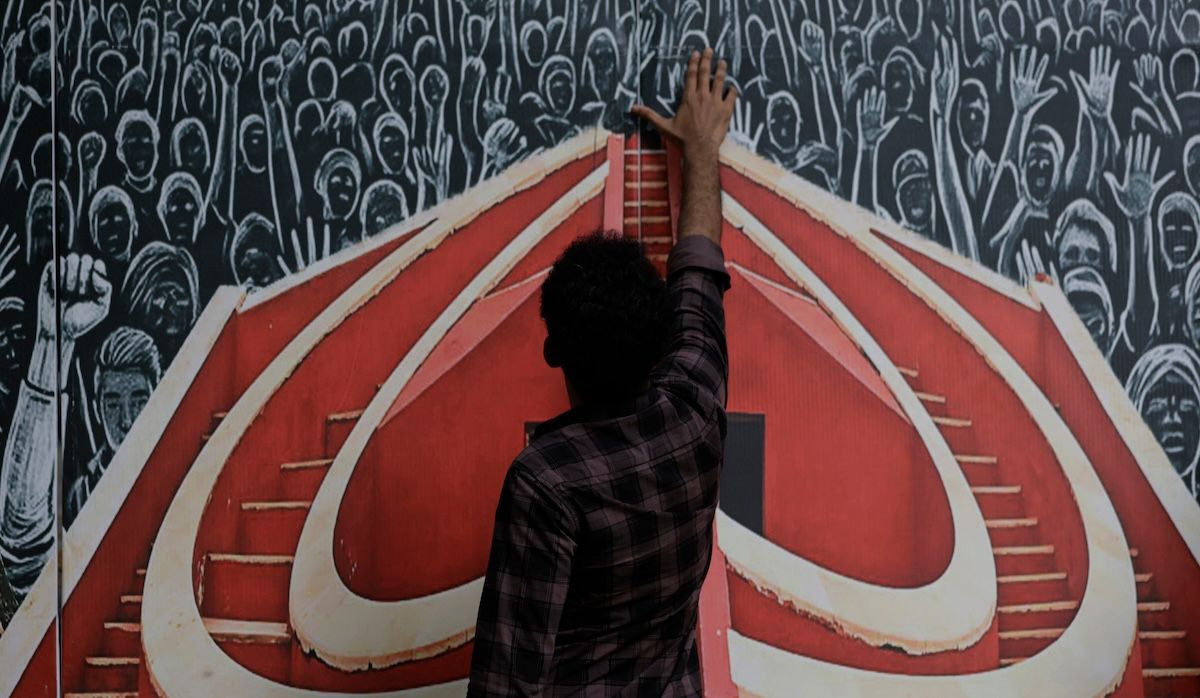
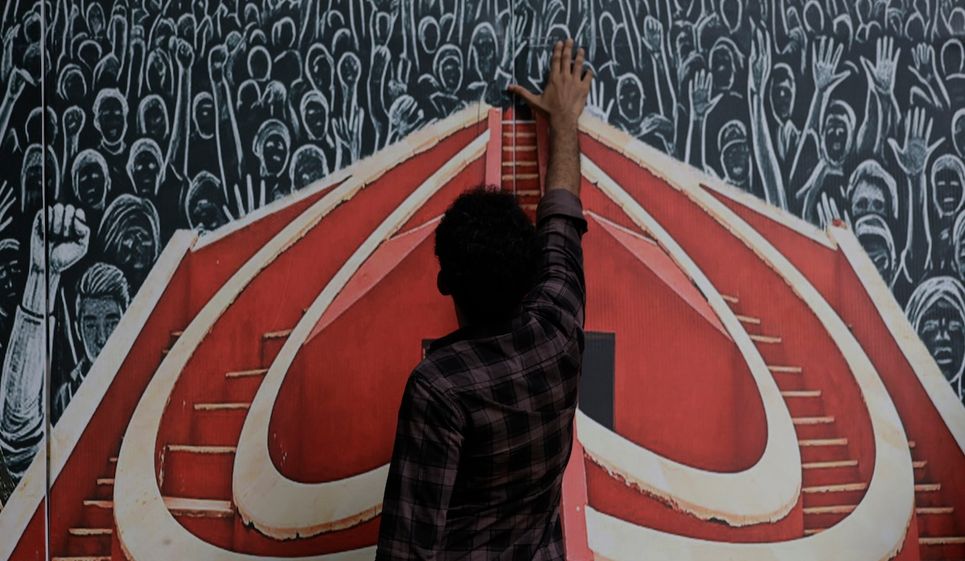
A man fixes a billboard illustration of hands raised in protest before the start of a student led protest to demand the resignation of India’s Chief Election Commissioner in Fort Kochi, Kerala, on Oct. 18, 2026. (Photo by Sivaram Venkitasubramanian/NurPhoto)
After India’s Chief Justice flippantly referred to the nation’s unemployed youth as “cockroaches” in May 2026, it was not forgotten. The backlash led to the formation of the satirical Cockroach Janata Party (CJP). It started as an Instagram page, posting reels and memes to raise awareness about government corruption and advocating for education reform. In demanding the resignation of India’s education minister over a paper leak, CJP led huge nationwide protests, and on July 25, the minister resigned. But CJP’s success in mobilizing Indians to speak up and organize is driven by its strong online presence. Their Instagram page amassed 24.8 million followers and counting—more than that of any individual political party in India. In the story of CJP’s rise, as Alt News writes, Meta’s Instagram was not merely a digital record of the movement, “it was one of the principal engines of it.”
In the aftermath of a protest on July 20, the party’s Instagram account was made temporarily unavailable in India. “Cockroach Janta Party’s Instagram account has been taken down by Narendra Modi,” CJP founder Abhijeet Dipke alleged on X, sharing a screenshot that merely stated that Instagram restricted the page following a “legal request.” Other CJP members also reported that their posts about the protests had been restricted. These legal requests are de facto orders, and they go far beyond content posted by CJP members: between March and July 2026, the government issued nearly 200,000 removal orders, up from just 2,300 between October 2024-25. But now, the orders Meta receives are reportedly being processed automatically.
The Indian government has primarily relied on content takedown orders to stifle online dissent. These orders are often premised on alleged violations of law, in this case, India’s Information Technology (IT) rules, which set the boundaries of permissible online speech in the country. Meta has long complied with such orders, in part because failing to do so risks its safe harbor protections, which shield it from legal liability for what its users post. Now, amendments to India’s IT rules that took effect in February mandate that platforms comply with takedown orders within three hours. These orders are now issued through a government system called the Sahyog portal which allows India’s law enforcement agencies to request the immediate removal of content from digital platforms. To comply with this new three hour rule, Meta has reportedly connected its systems directly to Sahyog so that removal requests are processed automatically, without review by Meta employees. In other words, the platform that helped propel CJP’s rise is now thwarting its influence—and the process is largely automated.
Despite the government’s best efforts to curtail CJP’s online and offline influence, the movement has only strengthened since its inception. On October 10, the CJP led a protest in Delhi, this time demanding the resignation of the Chief Election Commissioner over controversial revisions to the electoral rolls that could see 130 million Indians lose their right to vote. The government, in response, cancelled trains, closed metro stations, shut down mobile internet in central Delhi and detained thousands, including journalists. But the crackdown extended to platforms too. A week before the protest, on October 3, BitChat, a messaging service that works via Bluetooth and does not require internet connectivity, was abruptly removed from the Google Play Store and Apple App Store in India.
On the day of the protest, as Delhi Police detained protesters and journalists, India’s Ministry of Electronics and Information Technology sent Meta an advisory, asking the company to review its recommendation algorithms to ensure it does not result in “disproportionate exposure of users to a single or limited set of narratives,” and that Meta must provide “information or assistance” to law enforcement “with immediate effect.” The next day, a reel viewed over 11 million times, showing a woman clinging to a pole as police officers attempted to detain her was restricted on Instagram in India. This is not an isolated instance. Numerous Indian citizens have reported seeing their accounts blocked or posts removed. By mid-October, the Software Freedom Law Center—a digital rights group based in India—had documented over 200 posts taken down in connection with the protests on its Free Speech Tracker.
When Meta follows government orders to restrict content in India, they rarely tell users why. In cases examined by Alt News, Meta’s notifications cited only a “legal request” or using an “automated system,” without saying who ordered the restriction or why, and offered no option to appeal. But now, it seems Meta is using automation to proactively restrict content in India, and this time, without explicit government takedown orders. In the first half of 2026, Meta restricted over 5.4 million pieces of content. Notably, this content was restricted based on Indian law, not for violating Meta’s own standards, and the content remained available outside India.
5.4 million is a staggering number. For context, in the previous six months between July and December 2025, around 41,000 posts were restricted. By Meta’s own admission, a “large majority” of these restrictions were proactive and responsive to their legal obligations in India. Some of these obligations are especially vague and concerning. Content categories like “threats to the sovereignty and integrity of India” and “promoting enmity between groups” are notoriously hard to define, and the fact that Meta uses automated tools to make these judgements, exacerbates and brings to bear the depth of online censorship in India.
Takedown notices are far from transparent, especially because blocking orders under Section 69A of the IT Act are, by law, kept confidential. But takedowns leave a trace, and in theory, can be challenged in a court of law. Meta’s move to proactive and automated restrictions, however, makes even this difficult. There may be no government order behind a restriction at all, and users are often told only that an “automated system” flagged their content under the IT rules.
The pattern is clear: stifle dissent on the streets via law enforcement and a sophisticated surveillance apparatus, and bully platforms to remove unfavorable content via takedown orders. But Meta’s move to automate both the processing of these orders and now to proactively restrict content using automation means that Meta is no longer just complying with the Indian state’s censorship, it's streamlining it.
Authors