India’s Aadhaar Shows Foreign Dependencies Reach Beyond US-China
Meg Kitamura / Jul 8, 2026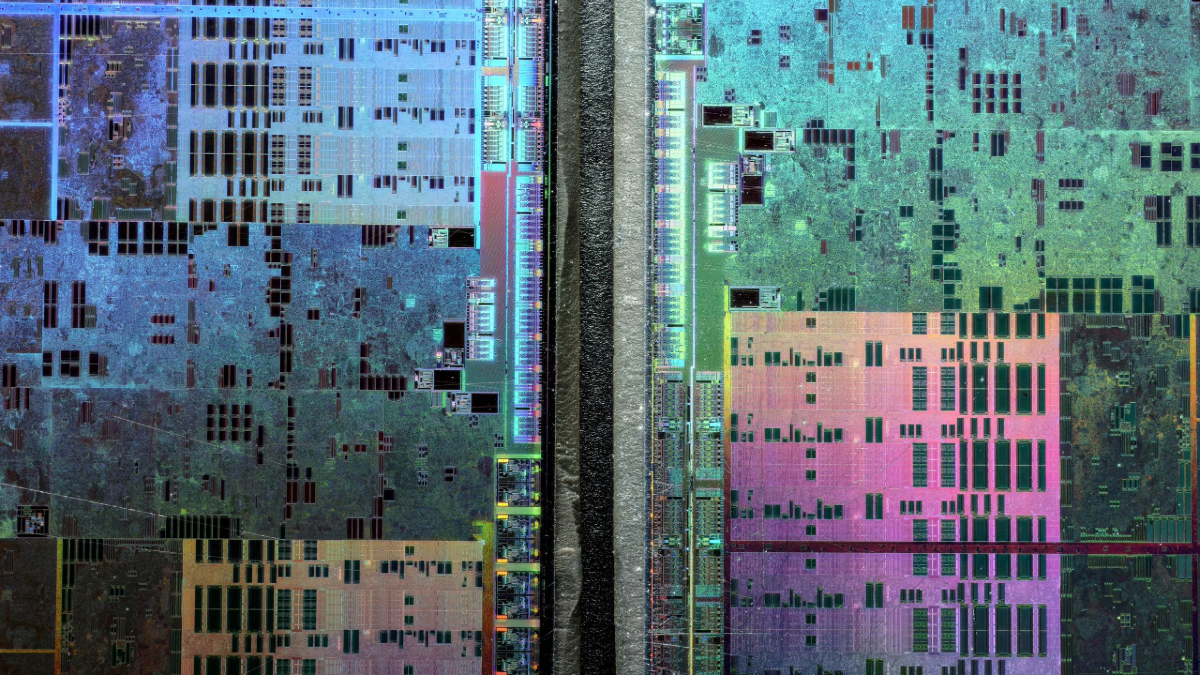
Fritzchens Fritz / Better Images of AI / GPU shot etched 5 / CC-BY 4.0
When India launched Aadhaar in 2009, it was presented as a home-grown achievement — a proudly sovereign digital identity solution that would allow the country to chart its own technological future, free from dependence on American and Chinese technology firms. As part of its broader digital transformation, India positioned Aadhaar as evidence that digital infrastructure could serve the public interest rather than private, often foreign, corporations.
By 2025, Aadhaar had enrolled nearly 99% of India’s adult population, making it the world’s largest biometric identification system. What is rarely acknowledged, though, is that this feat would not have been possible without the involvement of NEC Corporation, a Japanese multinational information and technology company that supplied the fingerprint extraction and matching system at the core of Aadhaar.
NEC's role is significant not because Japan poses the same geopolitical concerns as the United States or China, but because it reveals a broader blind spot in how digital sovereignty is understood.
Discussions of Aadhaar and India's Digital Public Infrastructure have largely overlooked the role Japanese companies played in building its foundational identity layer. This omission reflects a broader problem with contemporary debates on digital sovereignty. Increasingly invoked by India, the European Union, and the BRICS countries as a response to dependence on American and Chinese technology firms, digital sovereignty has become less about eliminating dependency than about choosing among competing foreign partners. In the process, questions of democratic accountability risk being displaced by geopolitical calculations.
Japan occupies a markedly different place in India’s strategic imagination, suggesting that concerns about digital sovereignty may be selectively invoked against certain geopolitical competitors. Not only has Japan maintained strong bilateral relations with India in recent years, but it also benefits from the absence of colonial baggage. Srinivas Kodali, an independent researcher who has extensively reported on India’s tech policy, notes: “India does not want to source any critical infrastructure, from CCTVs to biometric sensors, from China. Japan provides us with an alternative which is considered a win-win geopolitically and economically.”
The question is not whether Japanese dependencies are inherently better, but rather what accountability governs the dependencies that are chosen and why some suppliers might escape scrutiny altogether.
Japan’s NEC and its role in India’s Aadhaar
Japanese technology firms play a far more influential role than is currently acknowledged. According to the AI Global Surveillance Index published by the Carnegie Endowment for International Peace, NEC is the largest non-Chinese and non-American supplier of AI surveillance technology, operating in at least 70 countries around the world. Long before Aadhaar, NEC had supplied fingerprint identification systems to police agencies in the United States and to South Africa's post-apartheid government, establishing itself as one of the world's leading biometric providers.
NEC's biometric systems are widely regarded as technically sophisticated. In benchmark testing conducted by the US National Institute of Standards and Technology (NIST), its fingerprint recognition system achieved exceptionally low error rates. Yet field performance appears considerably weaker. In India, Aadhaar authentication success rates have been reported at roughly 93.5–95%, translating into millions of failed authentication attempts each month.
These discrepancies raise questions not only about technical performance but also about who bears responsibility when failures affect access to essential services.
With an accuracy rate of over 90%, the technology may seem good enough, but in absolute numbers, this amounts to more than 20 million failed attempts per month. In 2018, when asked about the disproportionately high exclusion rates experienced in rural parts of India, the Unique Identification Authority of India (UIDAI) sidestepped accountability by presenting itself as merely a vessel within the welfare pipeline. NEC, of course, has yet to address this discrepancy, let alone be subject to public scrutiny, largely because they continue to operate behind the scenes.
The structural gap in the sovereignty debate
In India’s case, there is a constellation of factors that together produce a structural gap in accountability that allows actors outside the dominant geopolitical frame to operate with minimal scrutiny. This gap emerges from three intersecting forces: colonial anxiety, Hindu nationalist self-reliance doctrine, and the US-China rivalry.
Colonial anxiety has been at the heart of India’s geopolitical considerations. Technological independence, for instance, has long been regarded by former colonies as a crucial prerequisite for achieving genuine political and economic sovereignty. In India, there is a degree of skepticism toward American technology firms, which can be exemplified by IBM’s aggressive penetration of the newly decolonized Indian market that stifled the development of the local computing industry, and, in turn, constrained its broader economic growth. Since 2018, India’s ruling Bharatiya Janata Party (BJP) has taken stringent measures to curb the growing dominance of American tech firms in the country, citing concerns that India could be “conquered by colonial powers all over again.”
These colonial anxieties over unfavorable dependencies have since fueled the BJP’s Hindu nationalist self-reliance doctrine. Launched in 2020, Atmanirbhar Bharat, or the self-reliant India initiative, has been an attempt by Prime Minister Narendra Modi to reshuffle the global order to align with India’s national development plans by unshackling the country from exploitative global supply chains and becoming a manufacturing hub where business is done on the country’s own terms. Dependencies on Chinese imports played a significant role in these debates. Following increased border tensions between India and China in 2020, the BJP identified India’s heavy dependency on Chinese technology as a threatening force against its independence, which led to the country asserting its sovereignty against its more powerful global counterpart by banning several Chinese apps.
Together, this has driven the demand to achieve digital independence from the two most visible rivals, the US and China. This positions India to strategically hedge against the dominant US-China rivalry. India immensely benefits from this: it allows the country, as a middle power, to assert its autonomy while leveraging the two economic powerhouses when needed.
The same sovereignty doctrine that positioned India against the US and China created the conditions under which a firm like NEC could operate without equivalent scrutiny.
Digital sovereignty beyond US-China polarization
The problem is not NEC specifically. It is the fact that digital sovereignty, in its current form, operates less as a mechanism of democratic accountability and more as a process of substituting one set of dependencies for another, mostly driven by geopolitical and national interests.
While digital sovereignty is increasingly being mobilized as a solution to the ailments of Big Tech authoritarianism, digital sovereignty in the form of self-determination and technological independence over a select few geopolitical rivals must not be mistaken for a pathway to democratic accountability.
Choosing your dependencies is not the same as controlling them.
Authors