Congress Has One Chance to Require a Warrant. It's About to Miss It.
Claudia Ruiz / Apr 27, 2026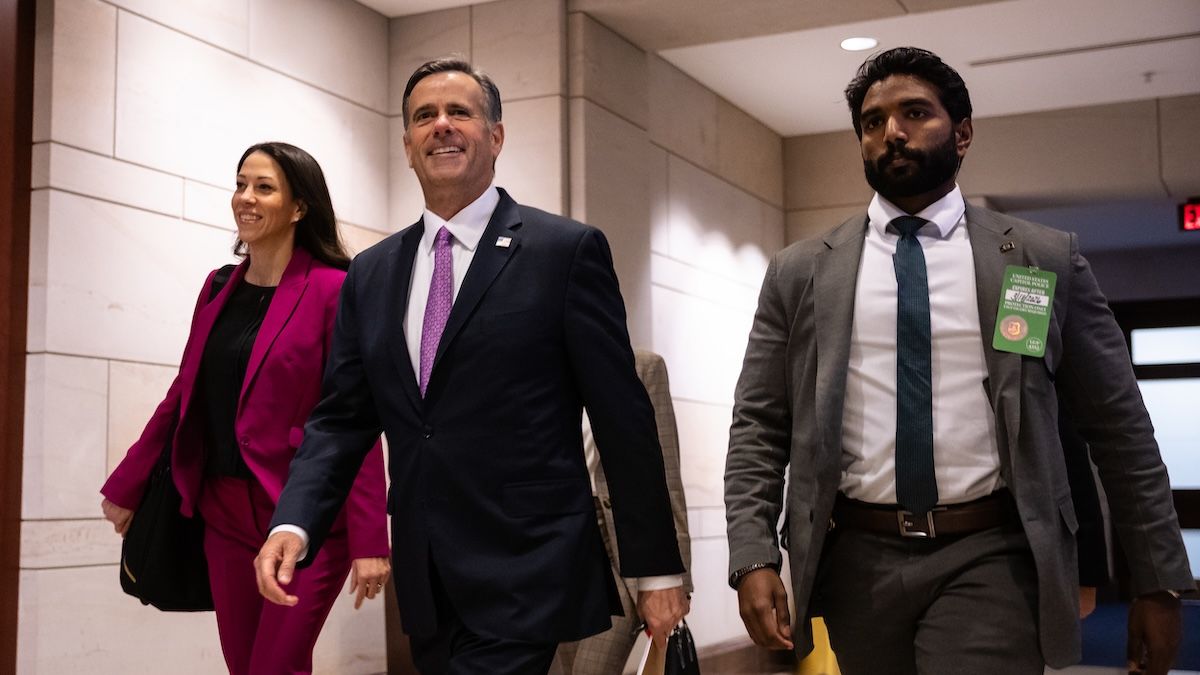
Central Intelligence Agency (CIA) Director John Ratcliffe arrives to brief House members on the Foreign Intelligence Surveillance Act (FISA) on Capitol Hill on March 18, 2026. (Francis Chung/POLITICO via AP Images)
The Fourth Amendment warrant requirement was written to keep the government out of your private life: no warrant, no entry. But our government has found two ways around it: buying your personal information from private companies and weaponizing what you already handed over to it in good faith.
Here’s the trick: while the US government cannot seize your location history without a court order, it can buy it on the open market from a data broker. This widespread and increasingly concerning practice side-steps rules that should apply.
Few people know that even though the government cannot compel your phone company to hand over years of your movements without legal process, it can purchase that same information from a company that extracted it from an app you downloaded to track your steps. The government also cannot demand your financial records without first obtaining authorization from a judge, but it can just buy a profile that combines your utility bills, car registration, credit information, and even address history. These kinds of transactions are now commonplace, including without a warrant, a court order, or even a subpoena.
This is the data broker loophole, and it turns the requirements of the Fourth Amendment into a mere suggestion. Right now, Congress has until April 30, 2026, to vote to close this loophole—or instead reauthorize the rights-violating surveillance architecture that is enabling the federal government to investigate protesters based on just a screenshot of their face. The latest proposal on the table, the Foreign Intelligence Accountability Act, which was put forth last Thursday, would extend these sweeping surveillance authorities for three years — still without a warrant requirement."
Section 702 of the Foreign Intelligence Surveillance Act (FISA) was enacted in 2008 to allow intelligence agencies to collect communications of foreign targets abroad. Yet since its passage, it has become a dubious legal foundation for a domestic surveillance apparatus operating well beyond the reach of judicial oversight and not limited to foreign surveillance as the law intended.
The Federal Bureau of Investigation (FBI) conducted 3.4 million warrantless searches of Americans’ communications under Section 702 in 2021 alone. In 2022, the government reported to the FISA Court that the FBI had misused this authority 278,000 times, sweeping up Black Lives Matter protesters, donors to a Congressional campaign, journalists, and members of Congress.
The data broker loophole is dangerous enough. But artificial intelligence (AI) tools now allow massive datasets to power ongoing surveillance, rather than be used for deep dives related to investigations. When Anthropic refused to allow the Department of Defense to use its AI systems for domestic mass surveillance, the Pentagon blacklisted it as a “supply chain risk”—a designation never before applied to a US company. What the Administration wants is explicit: AI systems capable of growing and analyzing the geolocation records, financial profiles, and browsing histories that already flow through the data broker loophole, processed at machine scale and speed.
As Anthropic’s CEO has warned, powerful AI risks creating a true panopticon—in which government deploys AI to look across billions of private conversations to detect dissent and stamp it out before it grows. FISA reauthorization without closing this loophole is a decision to allow warrantless surveillance of anyone, making rights violations and abuses far more likely. At scale, such surveillance is a cornerstone of authoritarian regimes, concentrating power and chilling free speech.
It is no coincidence that immigrant communities, families of color, and religious and political minorities are bearing some of the most immediate consequences of these abuses of power. These communities have historically been among the first to feel the effects when constitutional protections and civil liberties are weakened.
But once the government can know anything about anyone, the only question is who its powers will be used against next. Justice Louis Brandeis called the right to be left alone, including by the government, “the most comprehensive of rights and the right most valued by civilized men.” If the government can buy its way around the Fourth Amendment, the Constitution protects no one.
The reform UnidosUS calls for, alongside a robust coalition of advocates, is specific and achievable: require a court order before any federal agency purchases sensitive personal data from private companies. A bipartisan House majority voted for exactly this in 2024. Eighty percent of Americans support a warrant requirement before purchasing data, according to YouGov polling conducted on behalf of Demand Progress Education Fund and FreedomWorks. Seventy-six percent want a warrant requirement before agencies can search Americans' communications. Tellingly, only 12% want FISA extended as it is today.
The Constitution’s promise is that the government should work for the people, not against them. Latino communities contribute more than $4 trillion to the US economy annually—comparable to the world’s fourth largest economy. They apply to jobs, commute to work, promote their small businesses on social media, pay utility bills, register cars, file taxes, and shop online. Each of these activities produces data that flows through the data broker market. With the data broker loophole in place, compliance with the regular duties of civic life and participation in everyday economic life has become a liability, as the data it generates is weaponized against them.
Congress can change that. Latinos and others who may be more likely to come under suspicion from an abusive use of enforcement powers deserve the same privacy rights and Constitutional protections as anyone else.
A warrant requirement means that a judge—not a private contractor, algorithm, or agency with an ideological agenda—decides whether your most personal and private information can be collected by the government without your knowledge or permission. That basic privacy safeguard is a fundamental constitutional right, and essential to our democratic freedoms. Congress can still defend it by standing up for the rights of all Americans.
Authors