Big Tech is Becoming the Executor of the Dead
Mike Bennett, Nicole Bennett / May 29, 2026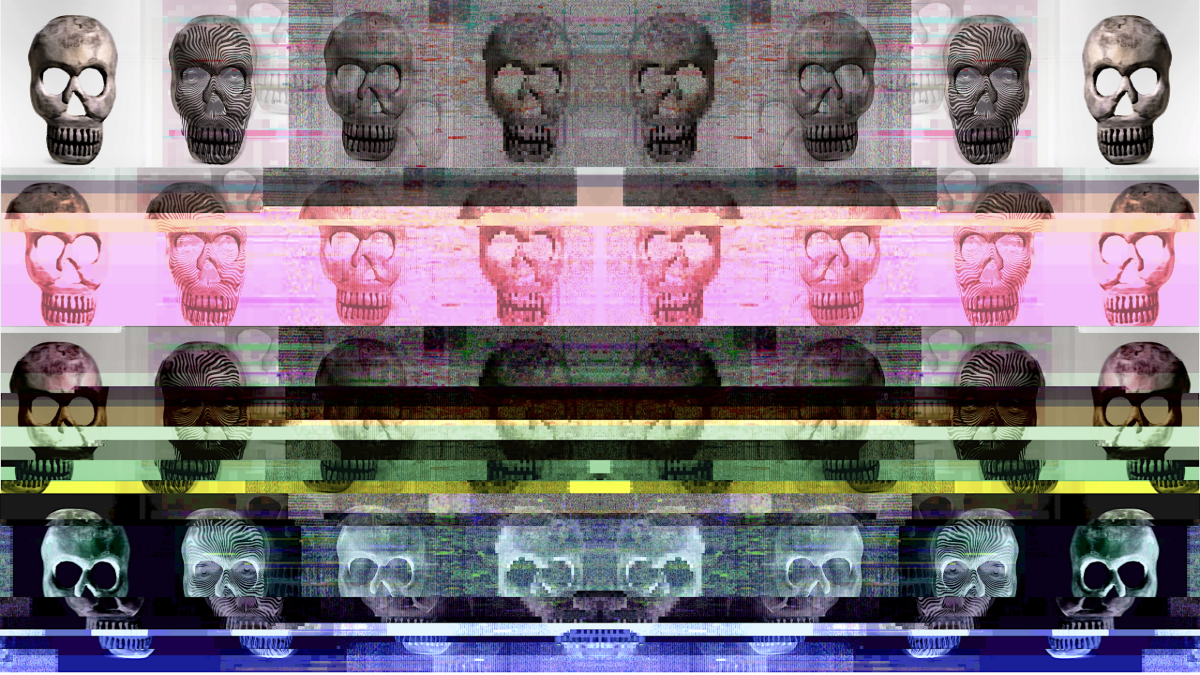
Corruption 1 by Kathryn Conrad / Better Images of AI / CC by 4.0
In late December 2025, Meta was granted US Patent No. 12,513,102 for an AI system designed to simulate a social media user when they’re absent, including “if the user is deceased.” The patent describes a bot that monitors content in a user’s feed, prompts a language model trained on that user’s prior activity, and then generates predicted interactions in the user’s name—for example, liking a post or posting a generated comment. In other words, the company has patented a mechanism that could keep your account expressing “you” even after you no longer exist to consent.
Much of the current guidance on digital legacies urges individuals to take control of their digital lives before they die. Tech companies offer various features to provide users with a sense of posthumous agency, such as Google’s Inactive Account Manager, Apple’s Digital Legacy Program, and Meta’s Legacy Contact and Memorialization settings. While these tools are marketed as a means of establishing posthumous control, they are little more than a façade of agency that ends where the corporate fine print begins. Ultimately, any authority we exercise remains subordinate to corporate terms of service, which are perpetually rewritten at the platform’s discretion and largely without oversight.
What makes Meta’s patent such an effective warning sign is that it imagines a future where posthumous agency isn’t primarily about heirs accessing or closing an account. It turns to platforms retaining the right to keep an account operationally ‘present,’ producing engagement as if the user were still there.
The fragility of this arrangement is best illustrated by the quiet discontinuation of Microsoft’s Next of Kin process. For years, the company maintained a straightforward, clearly written policy that allowed families to recover a deceased individual’s account data by presenting a death certificate. Microsoft ultimately discontinued this support without a public announcement, quietly shifting toward legal insulation at the expense of families seeking access. Microsoft's policy now states that the company forbids the release of account content even with a death certificate. Instead, the company must be served with a “valid subpoena or court order to consider whether it is able to lawfully release” account data. This requirement transforms a private request for records into a costly legal confrontation with a $3 trillion entity. This policy shift reveals the cold reality that the expectation of a digital inheritance is nothing more than a misplaced assumption of ownership. Users operate under the illusion that their digital legacies are inheritable in the first place, when in fact they are nothing more than transient corporate assets governed by terms they have no power to negotiate.
Meta’s patent underscores the same imbalance from the opposite direction: rather than families struggling to access a dead person’s data, the platform formalizes a pathway to keep using the dead person’s identity by simulating their voice and behavior as ongoing platform activity.
The vacuum of agency is sustained by a web of opaque retention rules. Without proactive intervention, a Google account eventually falls under default settings that permit the company to retain or delete data at its discretion after two years of inactivity. Meta operates with similar ambiguity, stating in its privacy policy that it determines data retention on a “case-by-case basis.” This disclaimer effectively grants the platform broad unilateral discretion over the lifespan of a user’s digital remains.
In that light, retention stops being a passive policy detail and becomes an input pipeline: Meta’s patent explicitly describes retraining a model on “user-specific training data” derived from a person’s interactions, then deploying a bot that can continue acting on that user’s behalf.
What remains is a digital afterlife governed by obscure, constantly changing corporate policies rather than the people we love and trust. Unless users navigate a fragmented maze of legacy settings before they die, their memories, messages, and photos exist at the mercy of algorithmic automation and obscure retention rules. The companies that lure users into their platforms with the promise to safeguard personal data are the very same companies that can erase or retain that data at their own subjective behest. If we have learned anything from Microsoft’s silent policy rollback and Meta’s unapologetic discretion, it is that digital legacies are not inherited by those a user leaves behind; they are hosted as long as they serve the platform’s interests.
Meta’s patent pushes that logic to its endpoint: hosting can become animating, where the platform generates new traces of you to preserve engagement continuity.
The corporate executor
When we populate these platforms with intimately personal information, we are effectively signing away the rights to our own digital history. The moment we share a post or send a message, we trade absolute ownership of our private lives for a corporate license that grants tech giants the power to store, copy, and monetize that data in perpetuity. These rights do not expire at death. Instead, by the simple act of digital engagement, we allow corporations to install themselves as the default executors of our digital remains when we die, exercising unilateral control over the records we leave behind.
In practice, platform default settings, rather than wills or heirs, dictate the fate of digital remains. Most users never take formal steps to manage their digital legacies, often because the options are obscure or shrouded in legalese. Through this inaction, control defaults to corporate policies buried in the fine print of service agreements. Grieving families are left to navigate a gauntlet of opaque support systems, while companies remain under no legal obligation to delete accounts, release data, or even acknowledge that a digital afterlife exists.
Researchers at the Oxford Internet Institute estimate that if the platform still exists in 2070, Facebook could host more accounts belonging to the dead than to the living, transforming it into a vast digital necropolis. For tech giants, keeping accounts active serves a clear purpose. Memorialized profiles sustain social graphs that drive engagement. Old posts are resurfaced through features like “On This Day,” generating clicks and extracting residual commercial value from the deceased. Meanwhile, digital traces of dead loved ones that remain in memorialized or active states may be incorporated into massive datasets used to train artificial intelligence systems.
What was once a speculative warning in the Black Mirror episode, “Be Right Back,” has become a commercial reality in which the intimate personal data of a lost loved one is harvested to create a “griefbot.” These simulations exist today, designed to mimic the voice and personality of the dead. In this new economy, the dead do not rest. They are repurposed. The result is a stark power imbalance. Our digital presence can outlive us, not as a legacy we control, but as an asset companies continue to exploit. So long as digital remains are profitable, dead loved ones serve as a silent workforce fueling the valuations of the companies that host them.
The limits of law and planning
The law offers a framework for digital inheritance, but it rarely overrides the fine print of a service agreement. In the United States, privacy rights generally expire at death. Even when the law recognizes such rights, enforcement is a quagmire. In Matter of Serrano, a New York Surrogate’s Court granted a surviving spouse limited access to a deceased user’s Google account, allowing contacts and calendar data while denying access to email. Legal rights exist, yet they often collide with corporate terms of service, offshore data governance policies, and mandatory arbitration clauses.
Many states have adopted the Revised Uniform Fiduciary Access to Digital Assets Act (RUFADAA). This legislation aims to grant executors and trustees the same authority over digital assets that they have long held over tangible property. It recognizes directions made through a will, trust, or online tool, theoretically allowing a user’s final wishes to reach across the digital divide.
In practice, however, the law stops short of forcing corporate compliance. Service providers routinely retreat behind their own terms of service and federal privacy barriers to limit access. Unless a user has provided explicit, granular consent before death, fiduciaries are often granted only a catalogue of metadata, while the actual content of messages remains locked away. They may require court orders, charge administrative fees, provide only partial records, or deny access entirely. The law’s promises are real on paper, but in the digital realm, enforcement remains expensive, inconsistent, and stacked against families with ordinary resources.
A civic infrastructure for the dead
If digital afterlives are governed by private infrastructure, individual planning will never be enough. The crisis is civic, not personal. Online traces have become a new kind of historical record, yet when that record is locked inside proprietary systems, the past is curated by profit motives rather than the public interest or the truth. Digital afterlives should not be treated as the default private property of tech giants. Instead, we must recognize them as a shared cultural resource that requires public transparency and must be safeguarded from exploitation.
Meaningful reform must start with mandatory disclosure of posthumous data policies and the establishment of clear legal rights for heirs to retrieve or archive content. We should impose strict limits on the use of deceased individuals’ data for targeted advertising or the training of AI models. Beyond regulation, governments could fund public repositories for digital heritage, creating a sanctuary for memory that is permanently separated from monetization.
These reforms would fundamentally reshape the incentives of the digital age, asserting that data stewardship is a democratic responsibility rather than a corporate prerogative. If our data continues to circulate, generating engagement and revenue long after we are gone, we must ask who is truly being remembered, and who is profiting from the act of remembrance. Until we confront the structural power that platforms exert over digital afterlives, the most personal memorials will remain little more than corporate assets.
Authors