As Competition Enforcers Gather, They Should Open the App Store Gates
Gene Burrus / Mar 27, 2026Gene Burrus serves as global policy counsel for the Coalition for App Fairness, a nonprofit coalition that counts a wide range of app and game developers and service providers as members, including Epic Games, Spotify and Match Group.
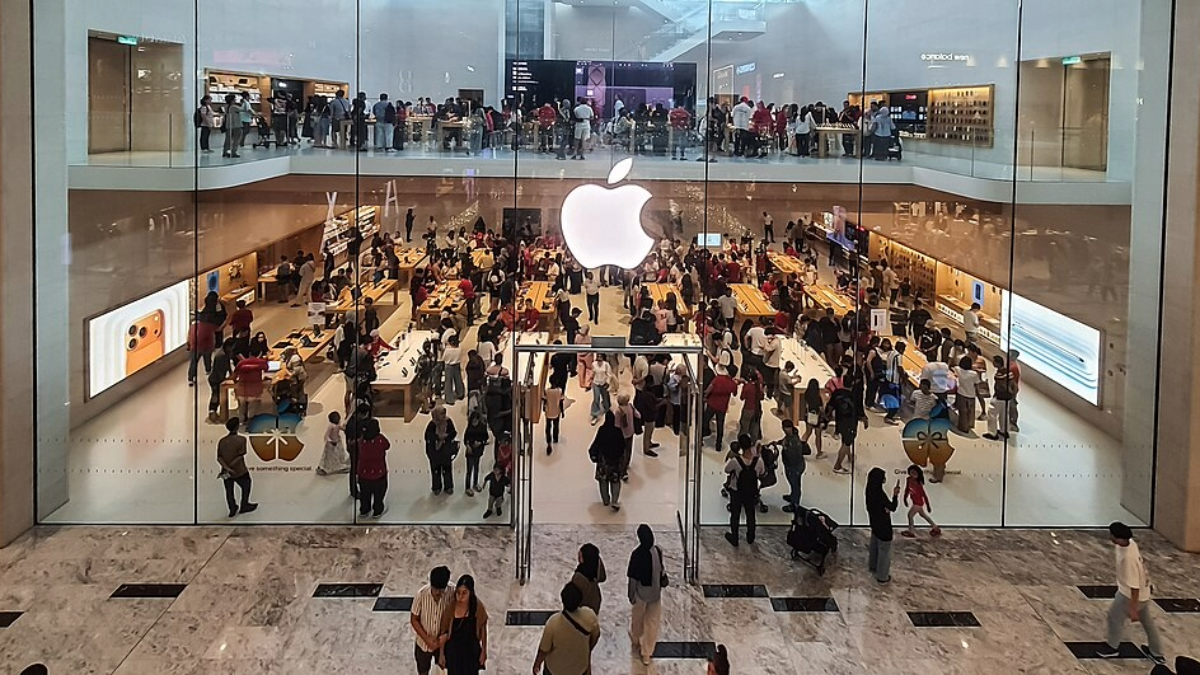
An Apple store in Kuala Lumpur. (Source)
This week, antitrust enforcers from more than 67 nations are gathering in Washington for the American Bar Association's annual Antitrust Spring Meeting, a major gathering where competition professionals take stock of the legal landscape. They come from different legal traditions, represent different governments and answer to different publics, but all broadly agree on the need to promote innovation, consumer choice, and competition across the technology ecosystem.
Many now also share a conviction that has only grown sharper: the mobile app economy is being stifled under the iron-fisted control of two companies.
Apple and Google effectively decide which software reaches consumers, which payment systems are permitted and what share of every transaction they collect. Billions of people access the internet primarily through smartphones governed by these rules. The scale of that gatekeeping power is without precedent in the history of commerce.
We would never accept this on our computers. No one needs permission from Microsoft or Dell to install software on a laptop. No one pays a 30 percent toll to HP every time they buy a program online. Indeed, 25 years ago, a similar worldwide consensus emerged and enforcement actions were taken to ensure exactly that. Yet today, we must tolerate this on our phones — the devices we use most, the ones that manage our finances, health records and daily communications.
The evidence has mounted from every corner of the globe. The European Commission has fined Apple for blocking developers from directing users to cheaper purchasing options outside the App Store, and has charged Apple and Google with further breaches of the Digital Markets Act. Japan's Smartphone Software Competition Promotion Act, which took effect in December, now requires both companies to permit alternative app stores and payment systems. South Korea has enacted legislation mandating alternative payment options.
The momentum extends well beyond Europe and Asia. Brazil's competition authority reached a settlement with Apple establishing new commission benchmarks for third-party transactions. India's Competition Commission has found that Apple holds significant market influence over its platforms and is weighing substantial penalties. The United Kingdom's Competition and Markets Authority has designated Apple's mobile ecosystem as holding strategic market status, laying the groundwork for tailored enforcement. And the United States Department of Justice is pressing forward with litigation alleging that Apple illegally monopolized the smartphone market.
These actions span different statutes, procedural frameworks and enforcement philosophies. That is exactly the point. When regulators operating under such varied legal systems independently reach the same conclusion, the diagnosis carries real weight.
Apple and Google have long argued that their tight control over app distribution is essential to protecting consumers from malware, fraud and harmful content. But monopoly control is a blunt and self-serving instrument for achieving safety. And the prevalence of scams and malicious apps in the mobile ecosystem prove that the incentives or lack thereof are not sufficient. More competition would improve safety.
The personal computer ecosystem has operated with open software distribution for decades while developing robust protections against threats. And despite their claims of vigilance, Apple and Google have repeatedly failed to prevent harmful apps from reaching their own curated stores. Security is best achieved through transparent standards and genuine accountability, and competition sharpens both and provides the incentives necessary for these companies to do better or cede ground to those that can.
What should unite the community of worldwide enforcers are the principles they are working to vindicate: interoperability, so that consumers can move freely between platforms and services; affordability, so that excessive middleman fees stop inflating the price of digital goods; innovation, so that startups can compete on the merits of their products rather than on their willingness to accept punishing platform terms; protection of intellectual property, so that developers retain meaningful control over their own creations; and security through competition, because genuine consumer choice produces better outcomes than any single gatekeeper's benevolent oversight.
These goals carry new urgency. Artificial intelligence is transforming the mobile landscape at remarkable speed, with nearly $200 billion flowing into AI startups in 2025 alone. The next generation of consumer applications will be built for mobile. If the gatekeepers can dictate which AI tools reach users, set the financial terms under which startups operate and bundle their own AI services with privileged system access, the competitive promise of this revolution will be strangled before it matures.
The approaches taken by different enforcers will vary, and appropriately so. But the world is converging on a shared set of outcomes. A developer in Tokyo should enjoy the same freedom to distribute software as a developer in São Paulo or Berlin. A consumer in Mumbai should have the same ability to choose an alternative app store as a consumer in London or Washington. The principle of open competition does not stop at any nation's border.
Platform companies are global; fragmented enforcement invites regulatory arbitrage and enables network effects to deter or prevent effective competition from emerging. By aligning our objectives, sharing findings and learning from one another's successes and setbacks, we can build a mobile ecosystem worthy of the technology it delivers. Enforcers arrived in Washington this week from different capitals. We hope they will leave with a shared purpose.
Authors